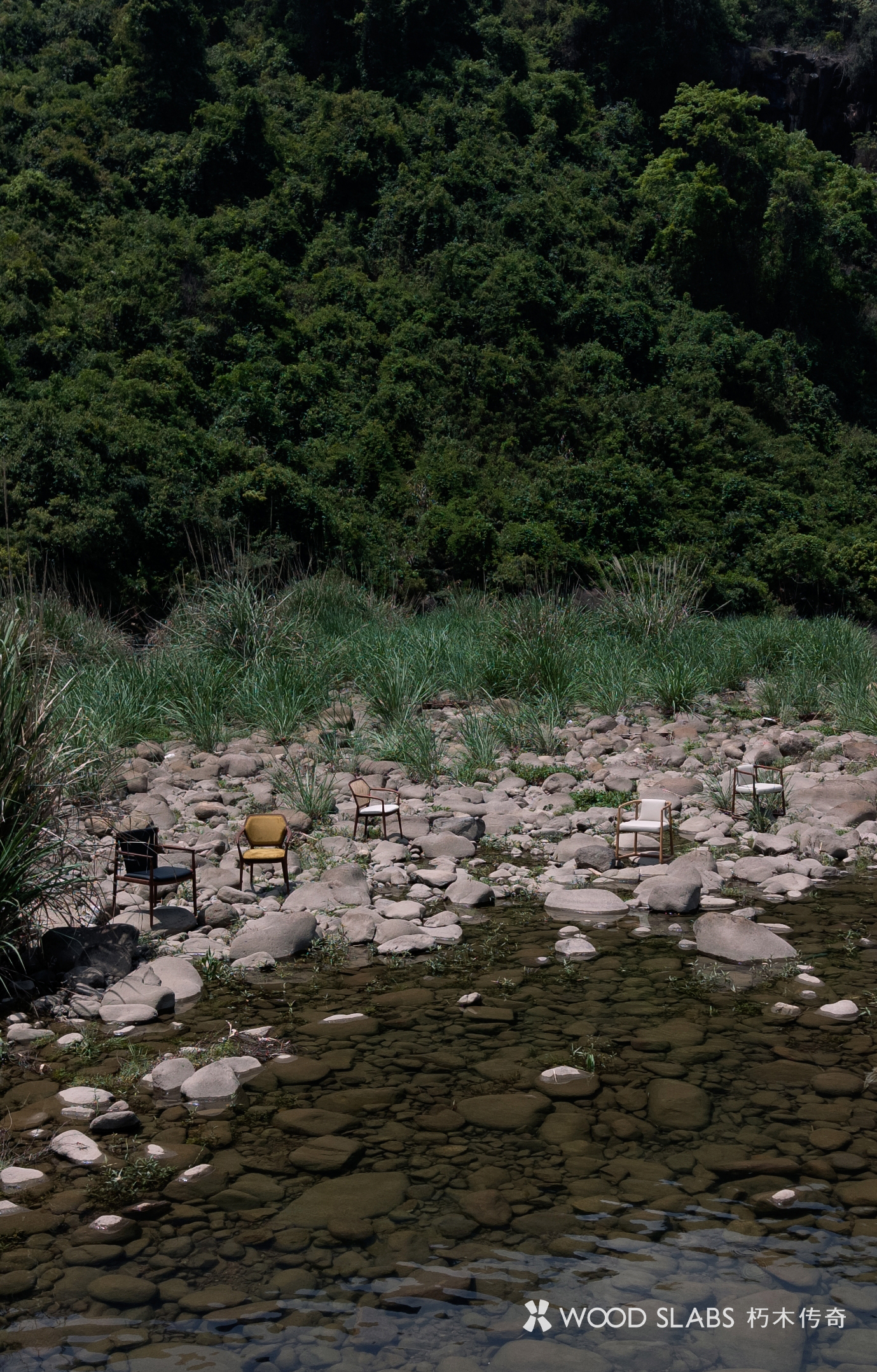
朽木传奇WOOD SLABS | 三种坐姿,三种生活哲学
发布于:2026/04/30
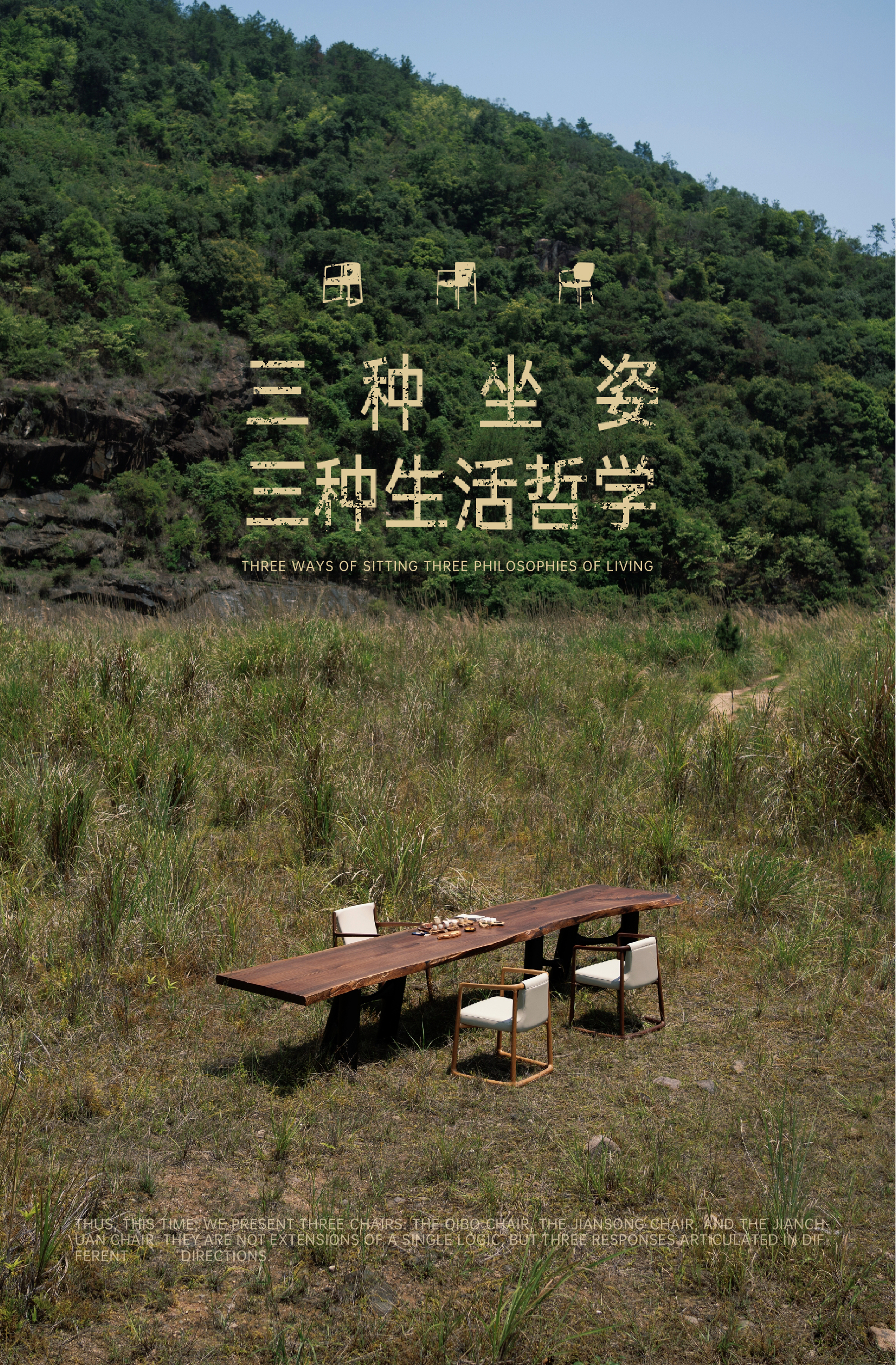
不是所有的椅子,都只是为了「坐下」。在朽木传奇的品牌语境中,椅子更像是人与空间之间的一种界面,身体如何安放,视线如何停留,情绪如何被承接,甚至时间如何在其中流动。我们反复推敲一把椅子的结构,并非为了形式上的变化,而是试图回答一个更本质的问题:人在空间中,究竟以怎样的姿态存在。
Not every chair exists merely for sitting. Within the language of WOOD SLABS, a chair becomes an interface between the human body and space—how the body settles, where the gaze comes to rest, how emotion is held, even how time flows through it.We repeatedly refine the structure of a chair not to pursue formal variation, but to address a more essential question: in space, in what posture does a person truly exist?
于是,这一次,我们带来三把椅子:栖泊椅、见松椅、见川椅。它们并非同一逻辑的延展,而是三种不同方向的回应。
Thus, this time, we present three chairs: the Qibo Chair, the Jiansong Chair, and the Jianchuan Chair. They are not extensions of a single logic, but three responses articulated in different directions.
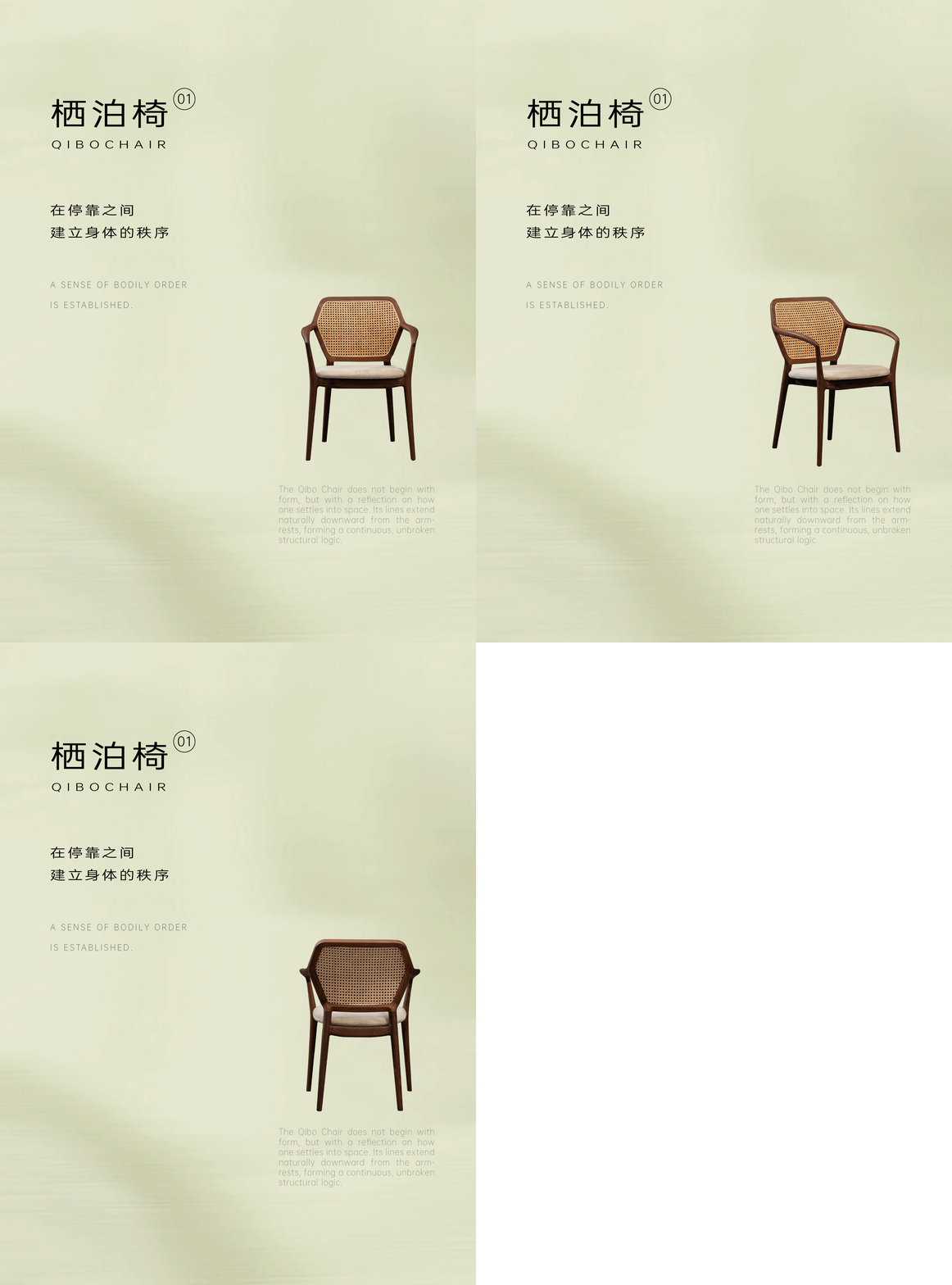
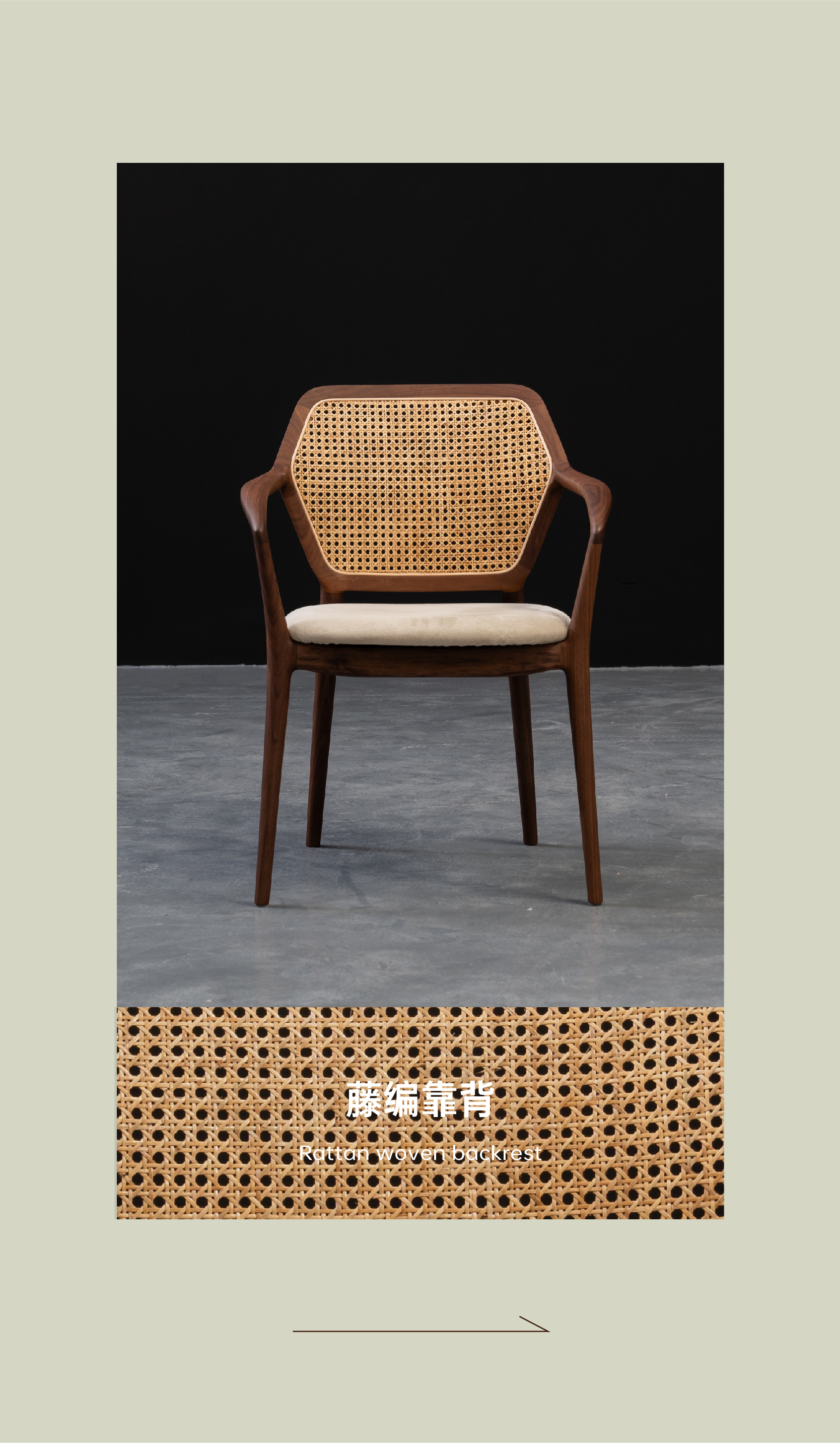
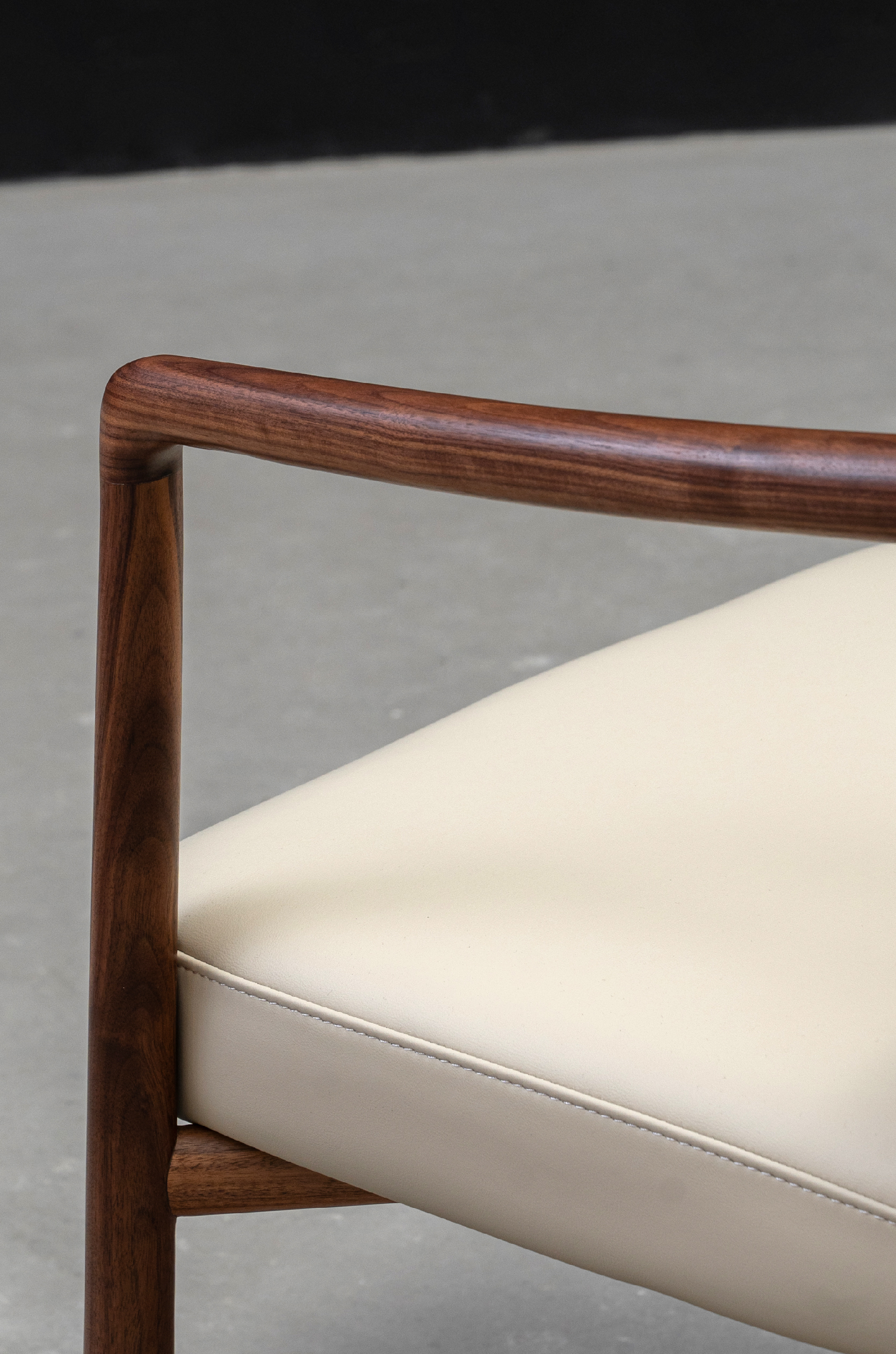
栖泊椅的灵感,并不始于造型本身,而是源于一种关于「人在空间中如何安放自己」的思考。它的线条从扶手向下自然延展,形成一笔贯通的结构逻辑,这种连续并非刻意雕饰,而更像顺应木材本身的生长轨迹,克制而准确。
The Qibo Chair does not begin with form, but with a reflection on how one settles into space. Its lines extend naturally downward from the armrests, forming a continuous, unbroken structural logic. This continuity is not the result of deliberate embellishment, but rather follows the inherent growth of the wood—restrained, and precise.
其气质隐约承续明式圈椅的精神,不在于形制的复刻,而在于那种“围合而不压迫”的东方坐感,让身体被温和承接,而非被结构限制。这是一种更接近“停驻”的坐姿,而非短暂停留。
Its character subtly carries forward the spirit of the Ming-style horseshoe-back chair—not through formal replication, but through an Eastern sensibility of enclosure without oppression. The body is gently supported, rather than confined by structure. It invites a mode of sitting closer to dwelling than to a brief pause.
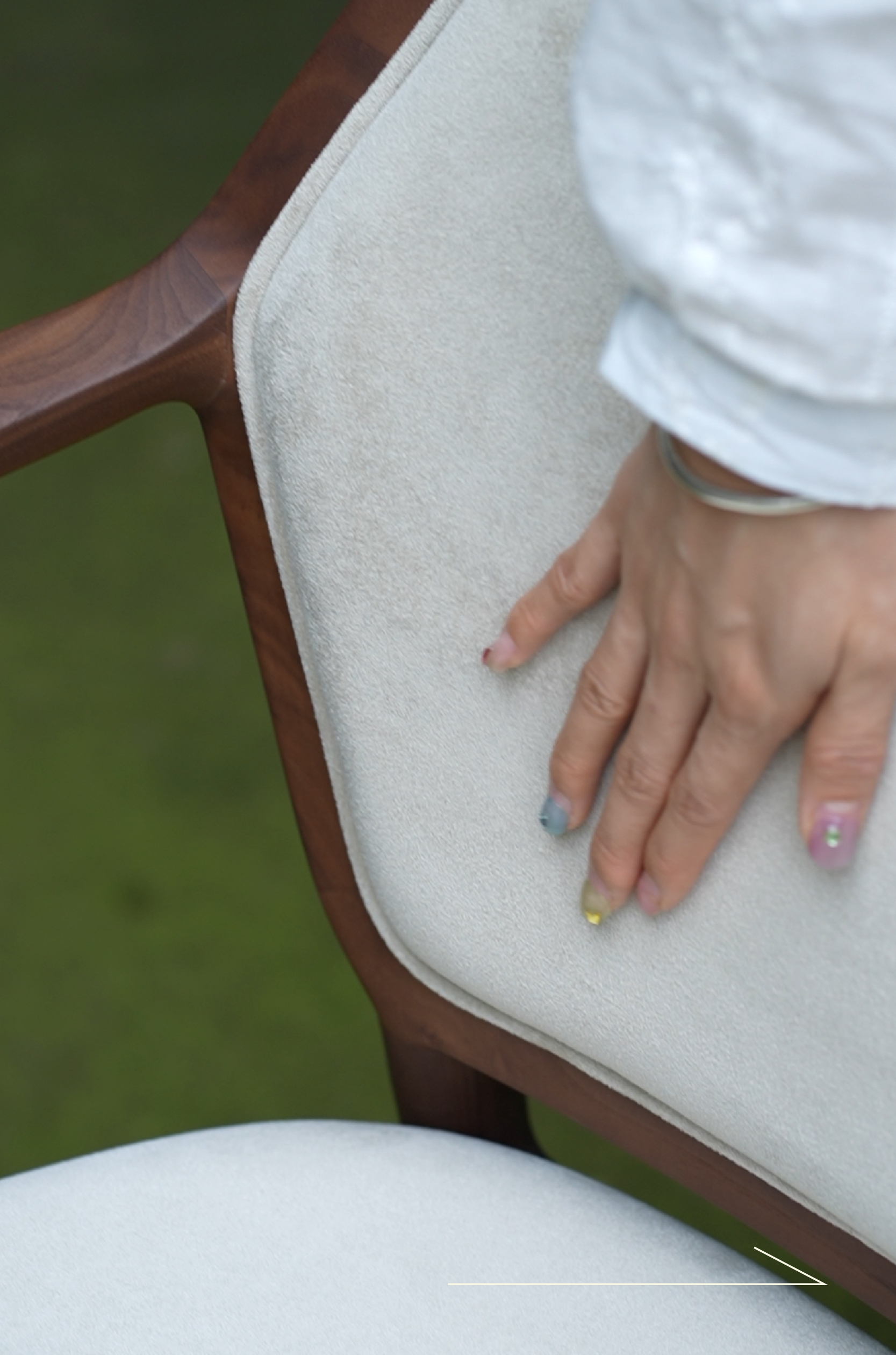
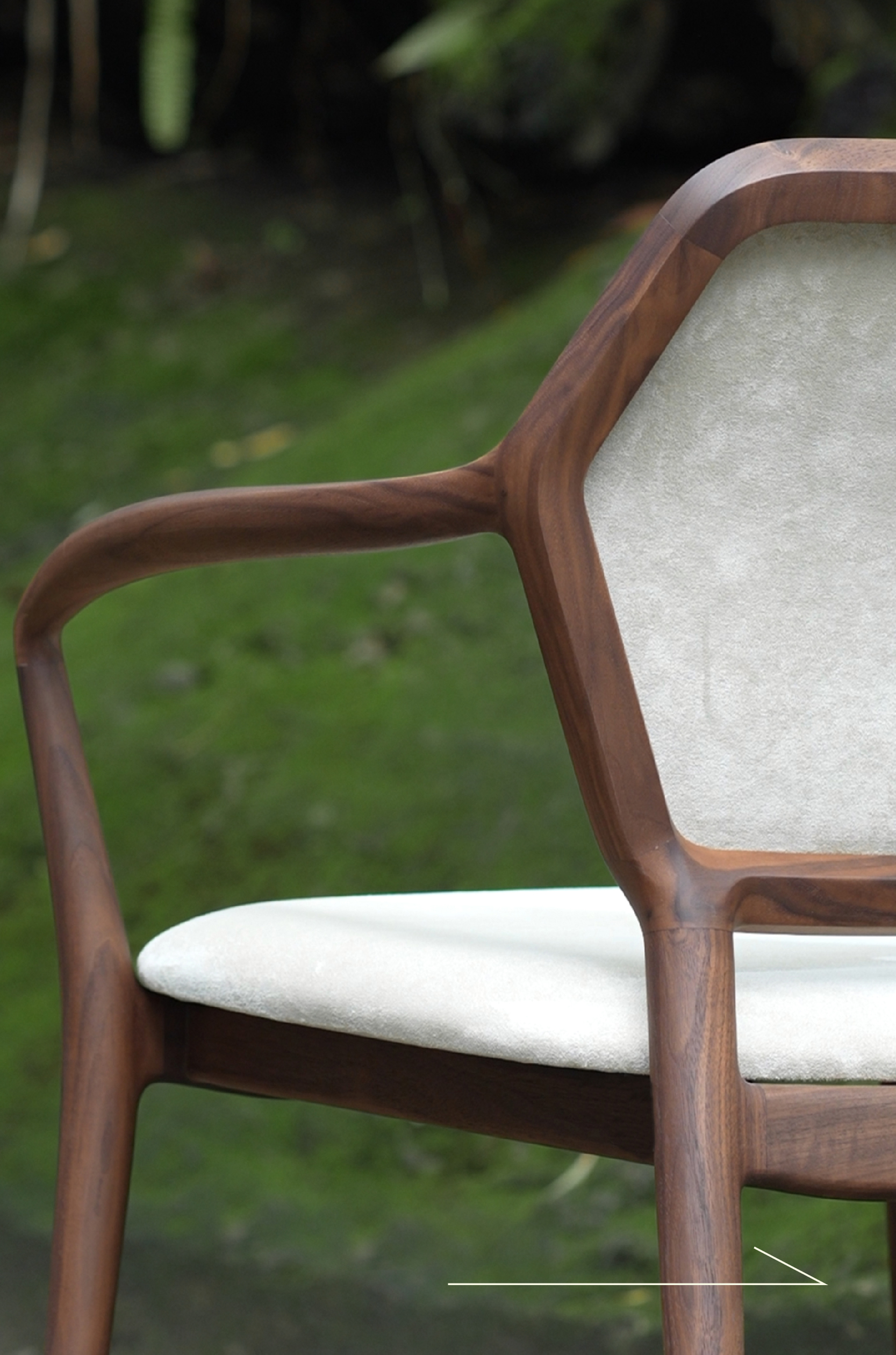
与此同时,六边形的几何靠背引入了理性而清晰的秩序,如同建筑骨架般建立起稳定的支撑关系,在视觉上形成克制而有力的张力,使东方的内敛与西方的结构在同一语境中达成平衡。这种平衡并非简单融合,而是彼此克制之后的共存。
At the same time, the hexagonal geometric backrest introduces a rational, legible order—like an architectural frame establishing a stable system of support. Visually, it creates a restrained yet assertive tension, allowing Eastern introspection and Western structure to find balance within the same context. This balance is not a simple fusion, but a coexistence achieved through mutual restraint.
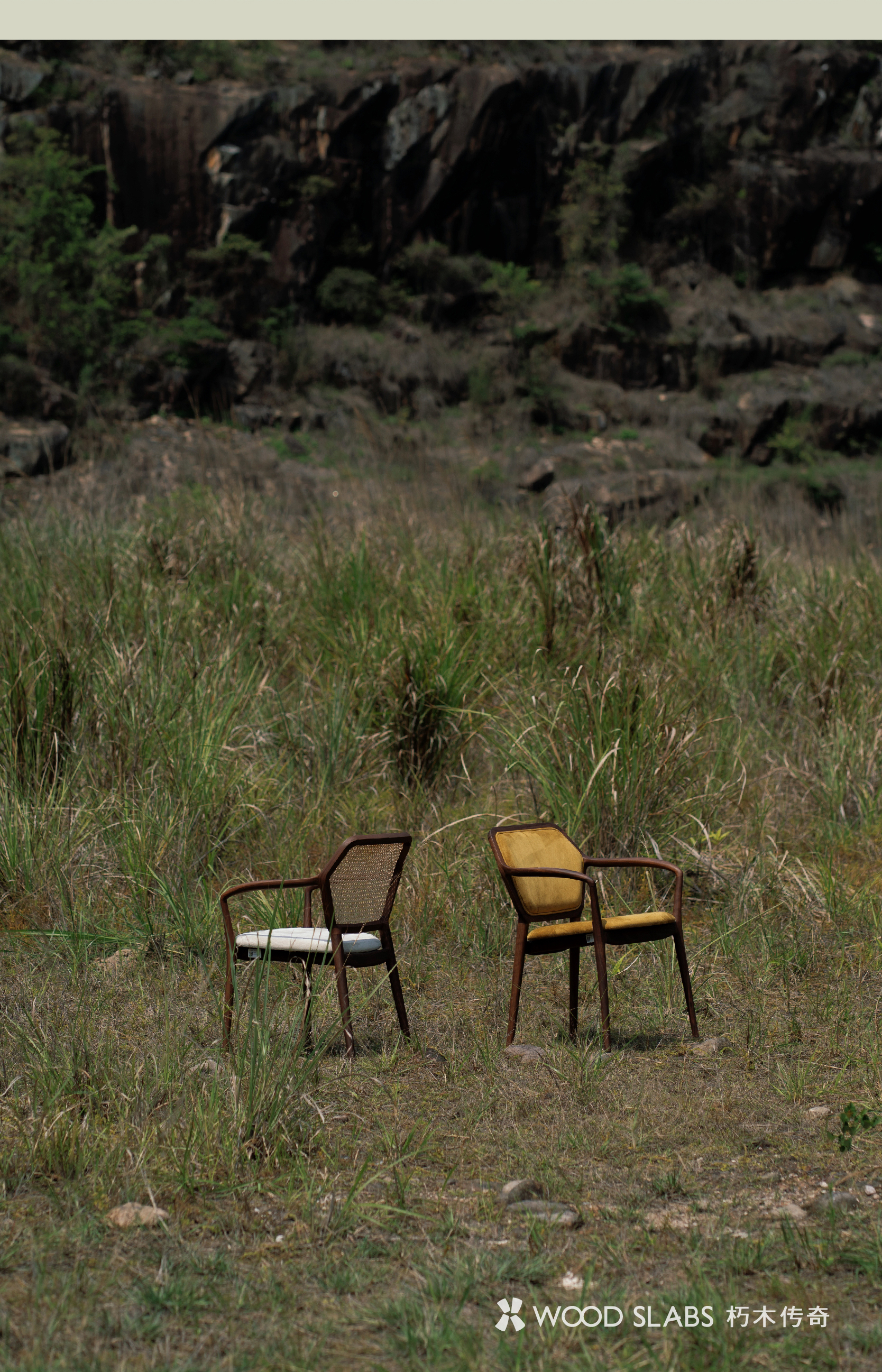
在使用层面,这种一笔成形的结构不仅带来视觉上的纯粹,也提供了流畅自然的支撑体验;延续明式家具“围而不困”的尺度逻辑,使其适合长时间停留而不产生压迫感;几何骨架强化了稳定性与识别度,让其在空间中具备安静却清晰的存在。
In use, this continuous, single-stroke structure not only brings visual clarity, but also offers a smooth and natural sense of support. It extends the Ming furniture principle of “enclosing without confining,” allowing for prolonged sitting without a sense of pressure. The geometric framework reinforces both stability and recognizability, giving the chair a presence that is quiet, yet unmistakably defined within the space.
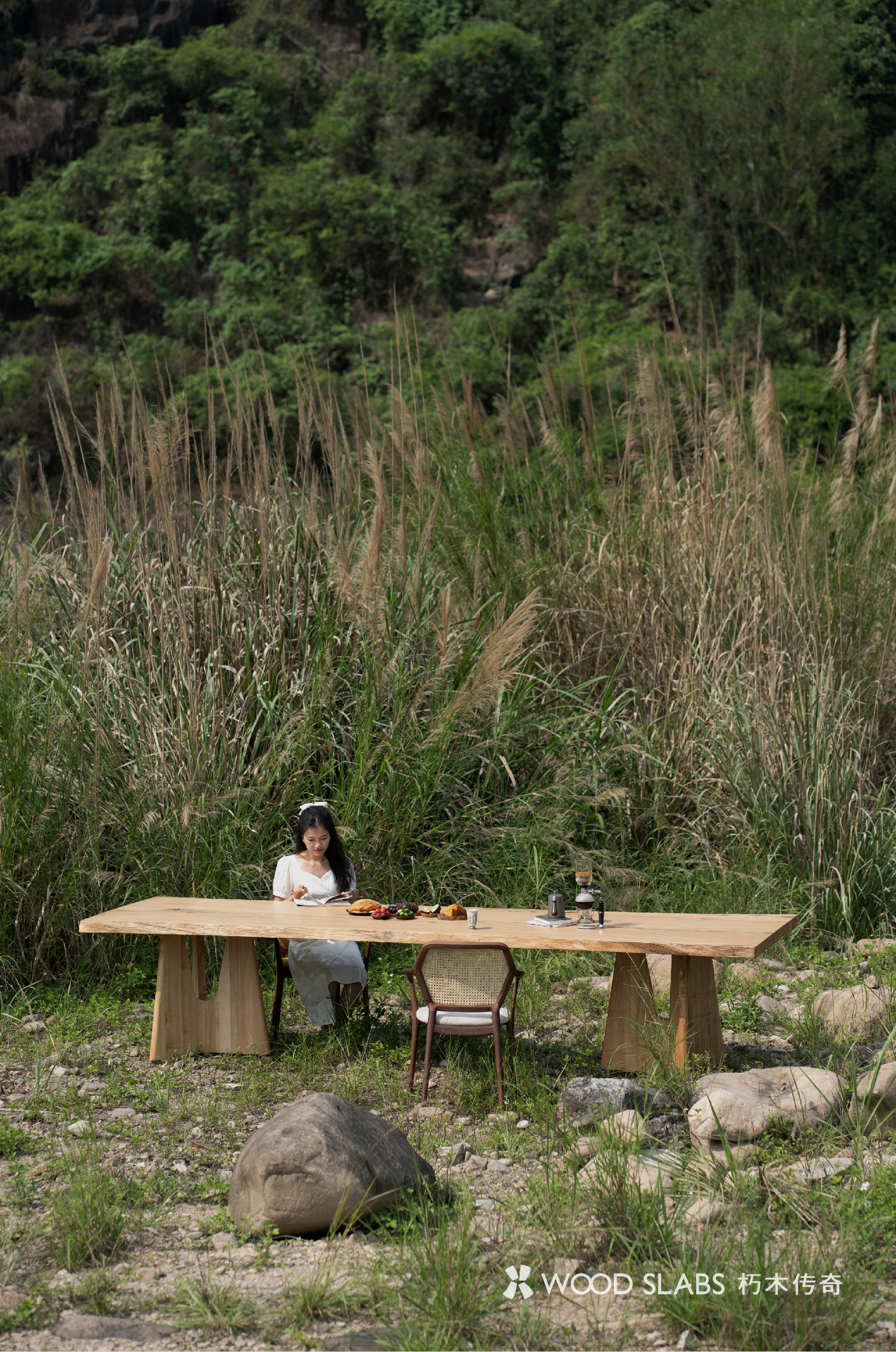
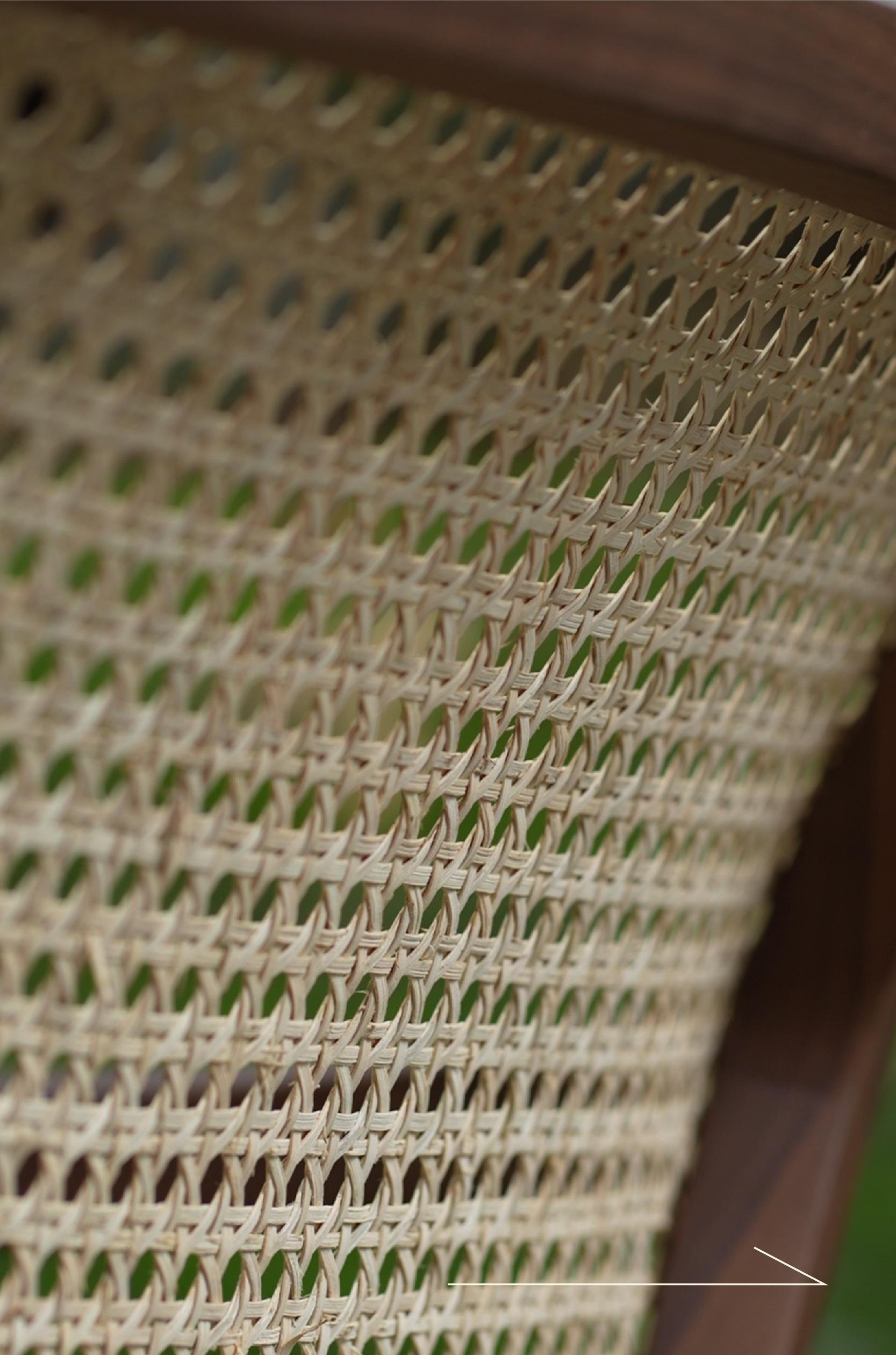
材质上,栖泊椅以黑胡桃木为基底,坐面与靠背提供两种材质选择,麂皮醇厚舒适,藤编通透自然,呈现截然不同的空间氛围和坐感体验。
In material expression, the Qibo Chair is grounded in a black walnut frame, with two options for the seat and backrest: suede, offering a rich and supple comfort, and woven rattan, light and breathable. Each presents a distinct spatial atmosphere and seating experience.
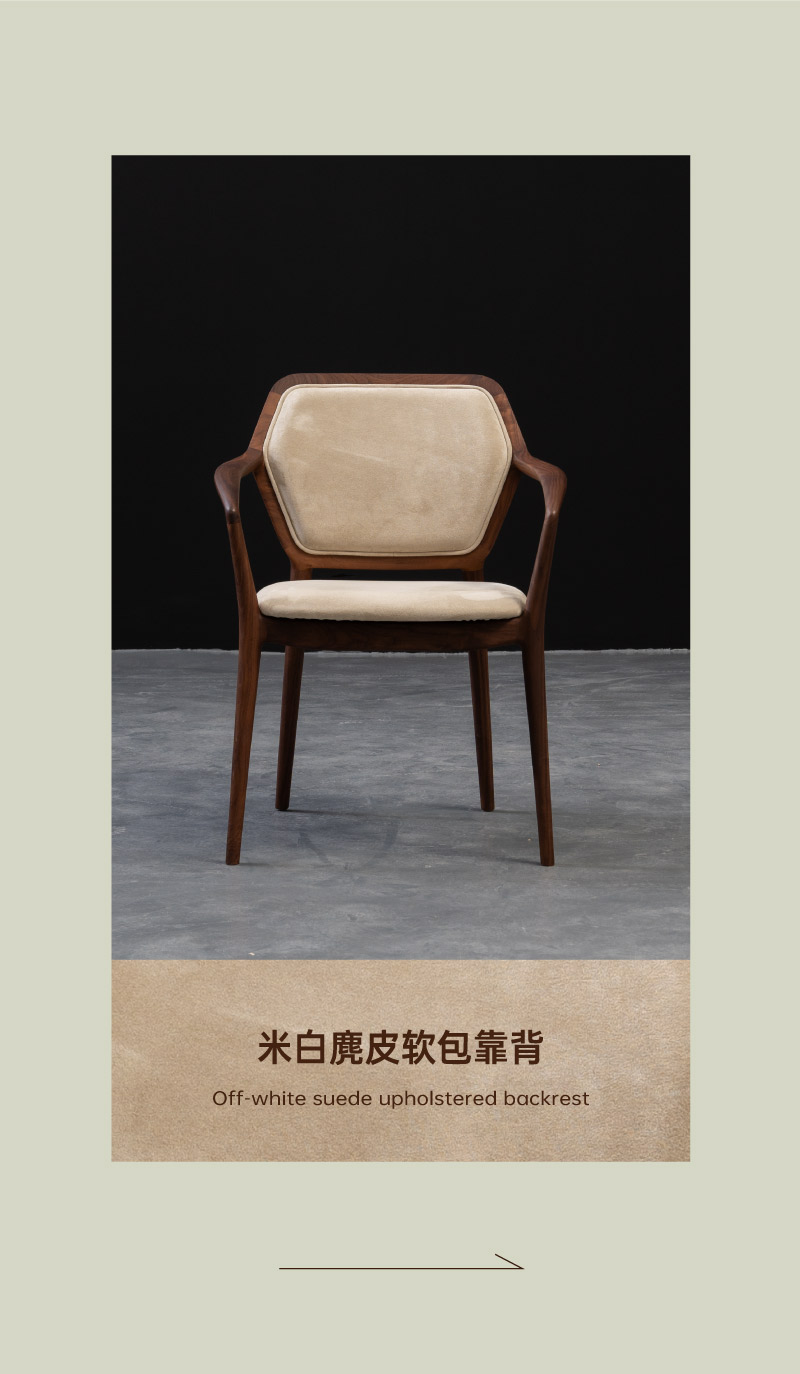
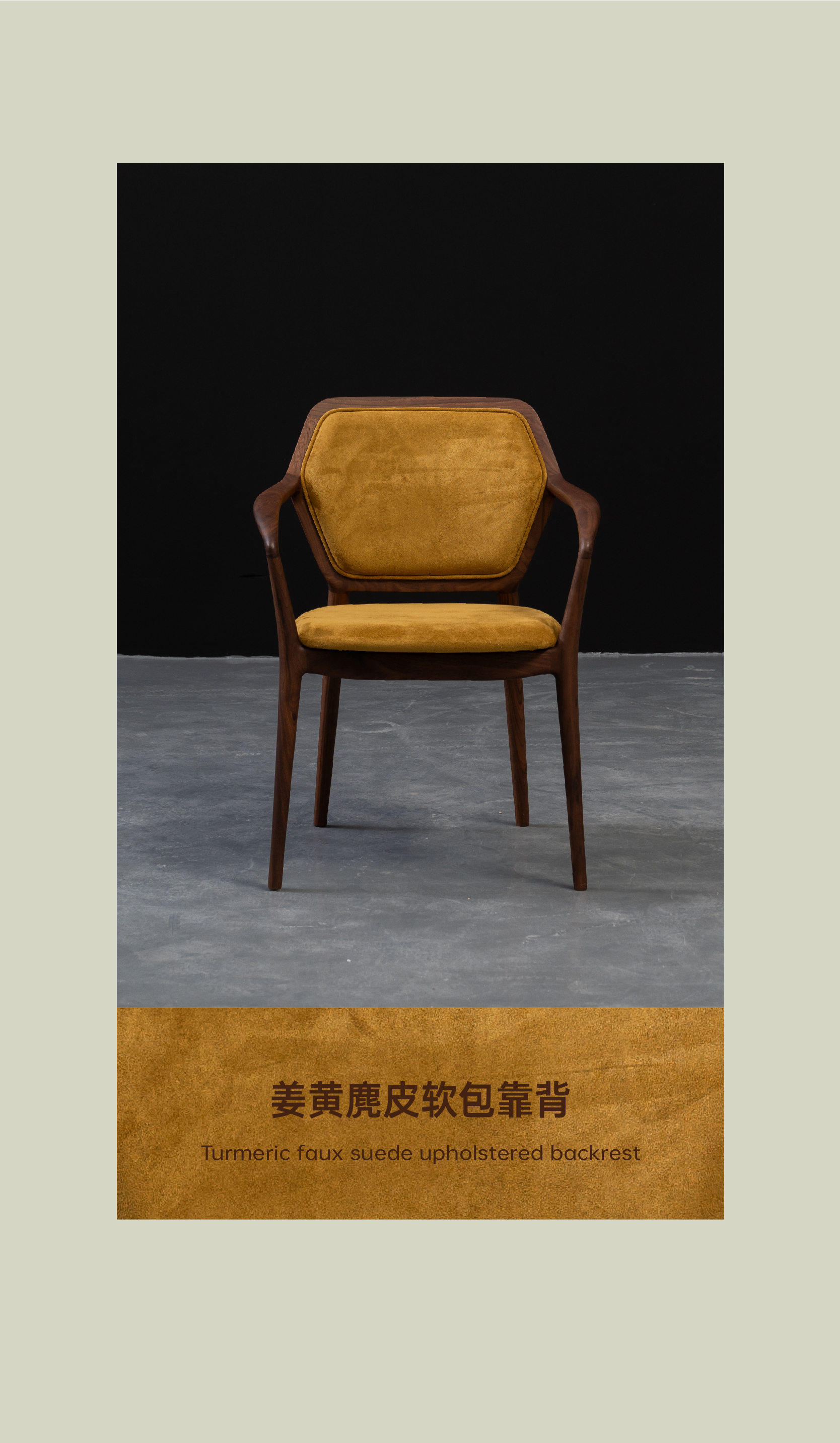
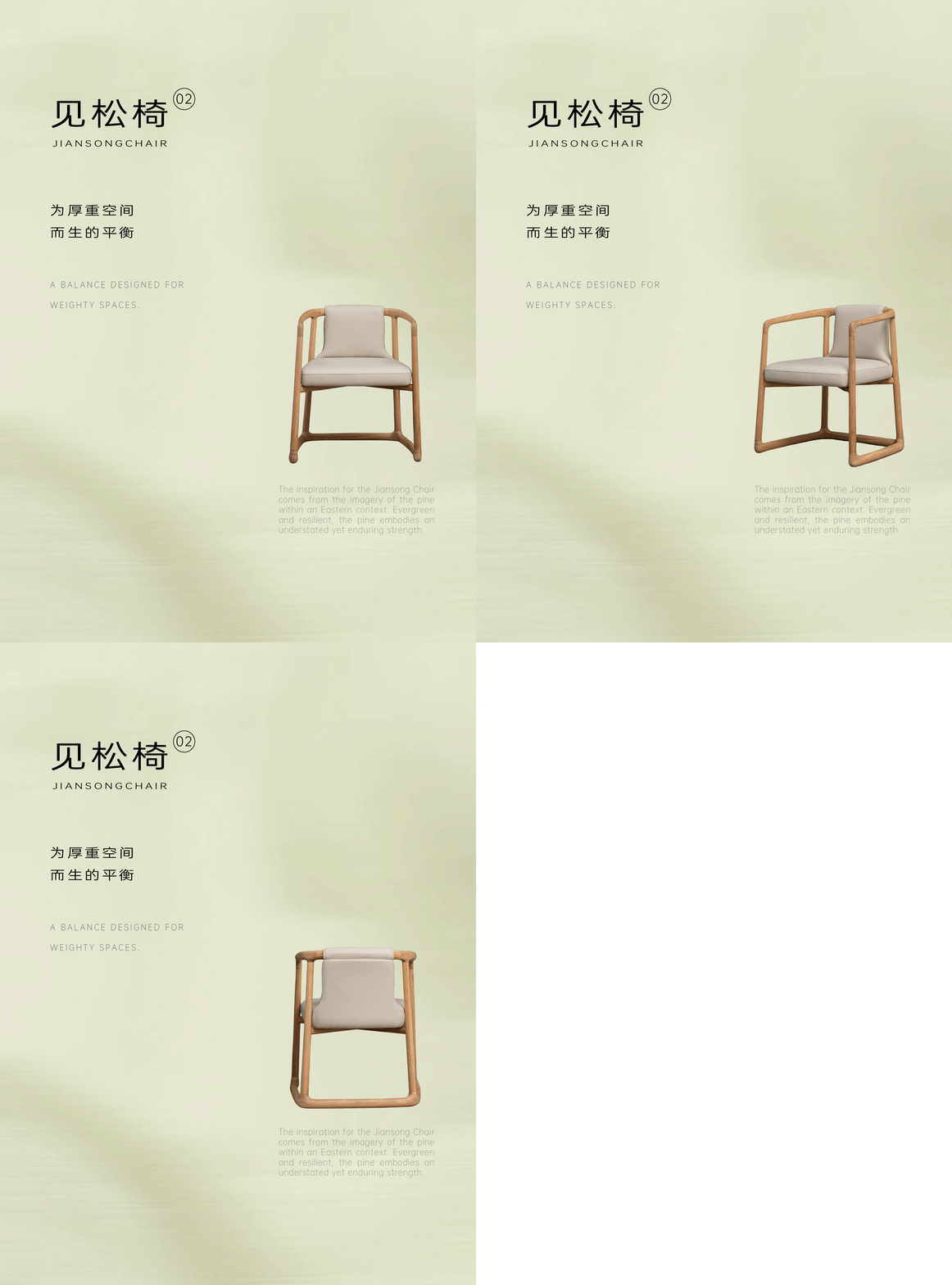
见松椅的灵感,源于东方语境中「松」的意象。松柏长青、坚韧不拔,这种内敛而恒定的力量,被转译为一种可被感知的结构语言,将「松」的精神落实于比例、线条与受力逻辑之中,使一把椅子不只是被观看,更是一种可被体验的气质。
The inspiration for the Jiansong Chair comes from the imagery of the pine within an Eastern context. Evergreen and resilient, the pine embodies an understated yet enduring strength. This quality is translated into a perceptible structural language, where the spirit of “pine” is expressed through proportion, line, and load-bearing logic—so that the chair is not only something to be seen, but a temperament to be experienced.
它同样诞生于一种现实的空间命题之中,原木大板寻找最佳坐具时,我们常常面临一个悖论:太重,会使得整个空间陷入沉闷;太轻,又难以承接自然历经百年的体量与张力。而见松椅,正是在这种拉扯中取得恰到好处的克制与平衡,既不削弱大板的存在,也不让自身成为负担。
It also emerges from a very real spatial question. When working with solid wood slab tables, we are often confronted with a paradox: if the seating is too heavy, the entire space becomes oppressive; if too light, it fails to hold the presence and tension shaped by centuries of natural growth.The Jiansong Chair is an answer formed within this tension—achieving a precise restraint and balance, neither diminishing the presence of the slab, nor becoming a burden within the space itself.
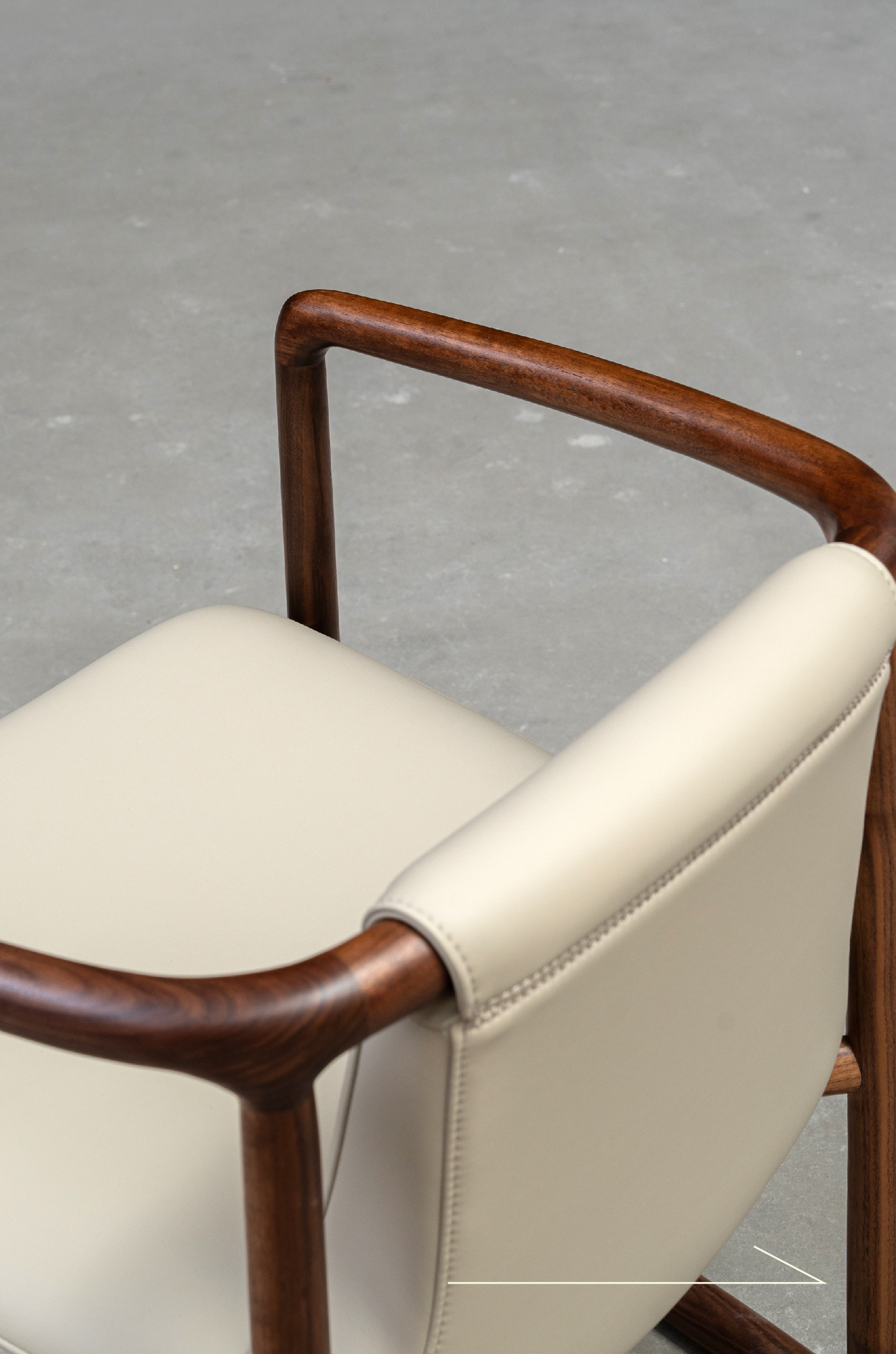
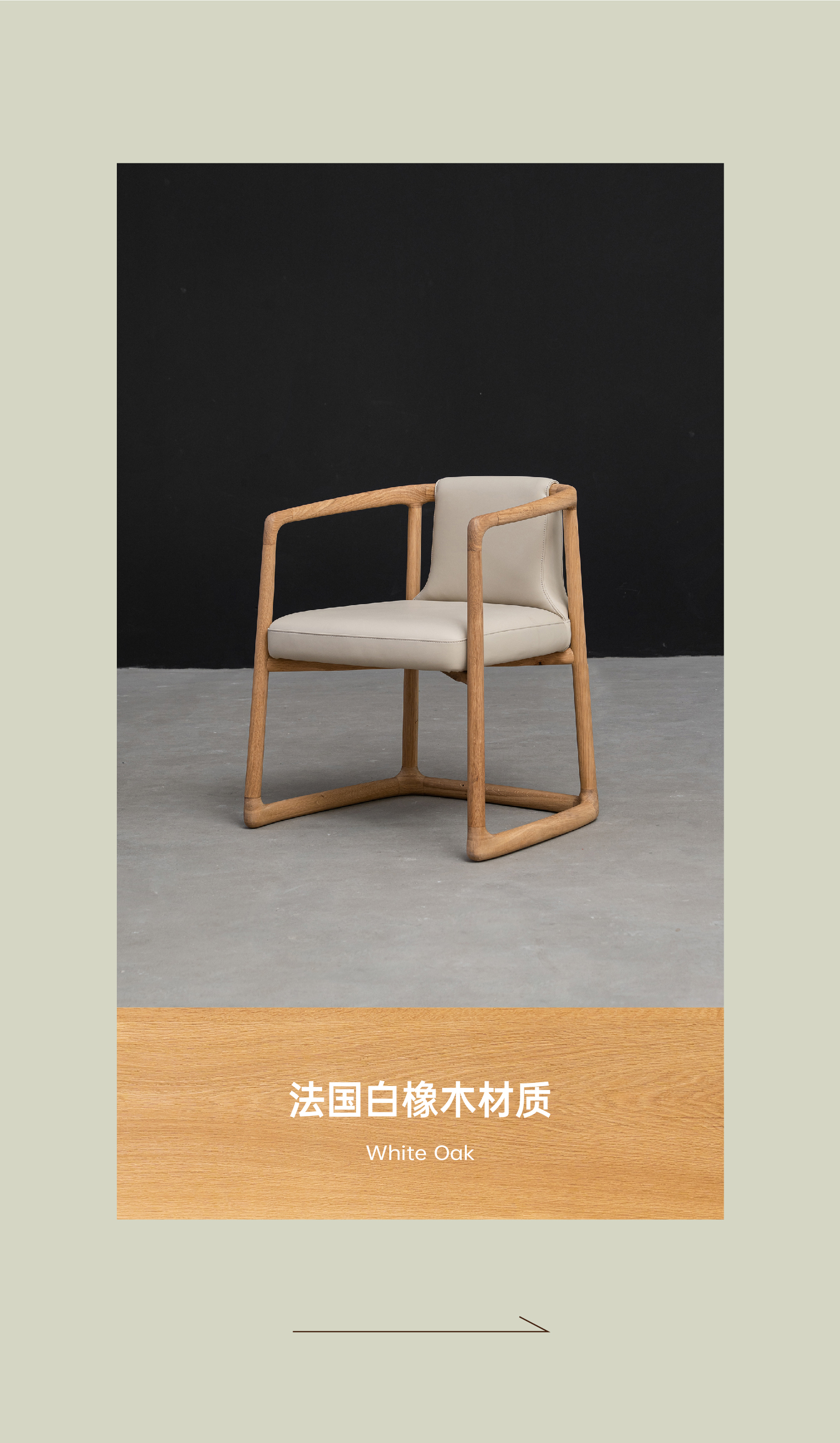
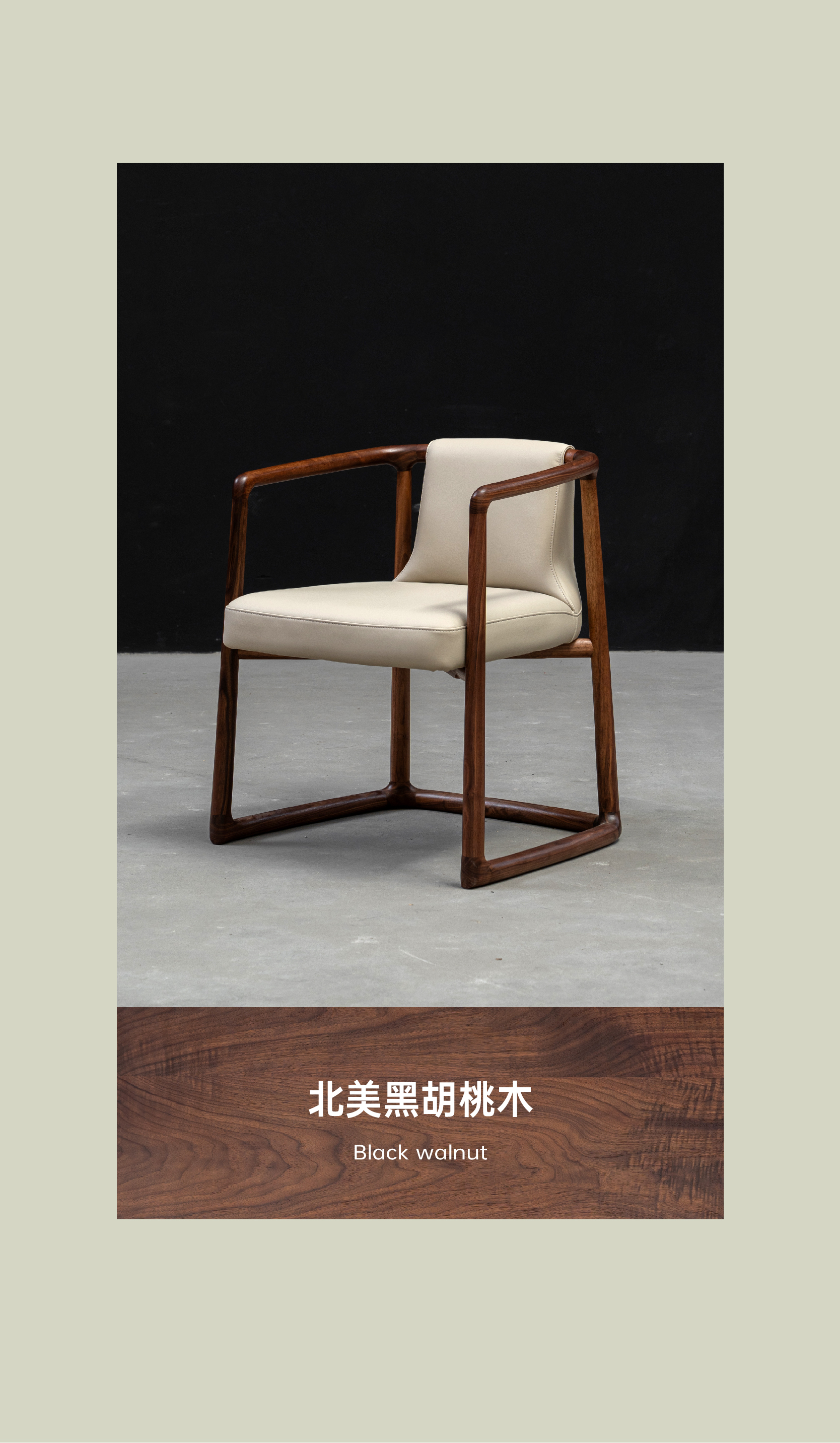
连续回环的雪橇腿结构,与扶手、靠背一体成形的管状框架,共同构成「一笔画」的整体轮廓。线条完整而克制,既有流动性,也具备清晰的受力逻辑,呈现出如树木自地生长般的挺拔姿态。
The continuous looped sled-base structure, together with the tubular frame that integrates the armrests and backrest into a single form, creates an overall silhouette like a single unbroken line. The lines are complete yet restrained, carrying both a sense of fluidity and a clear structural logic. The result is an upright presence that feels as if it grows directly from the ground, much like a tree rising naturally from the earth.
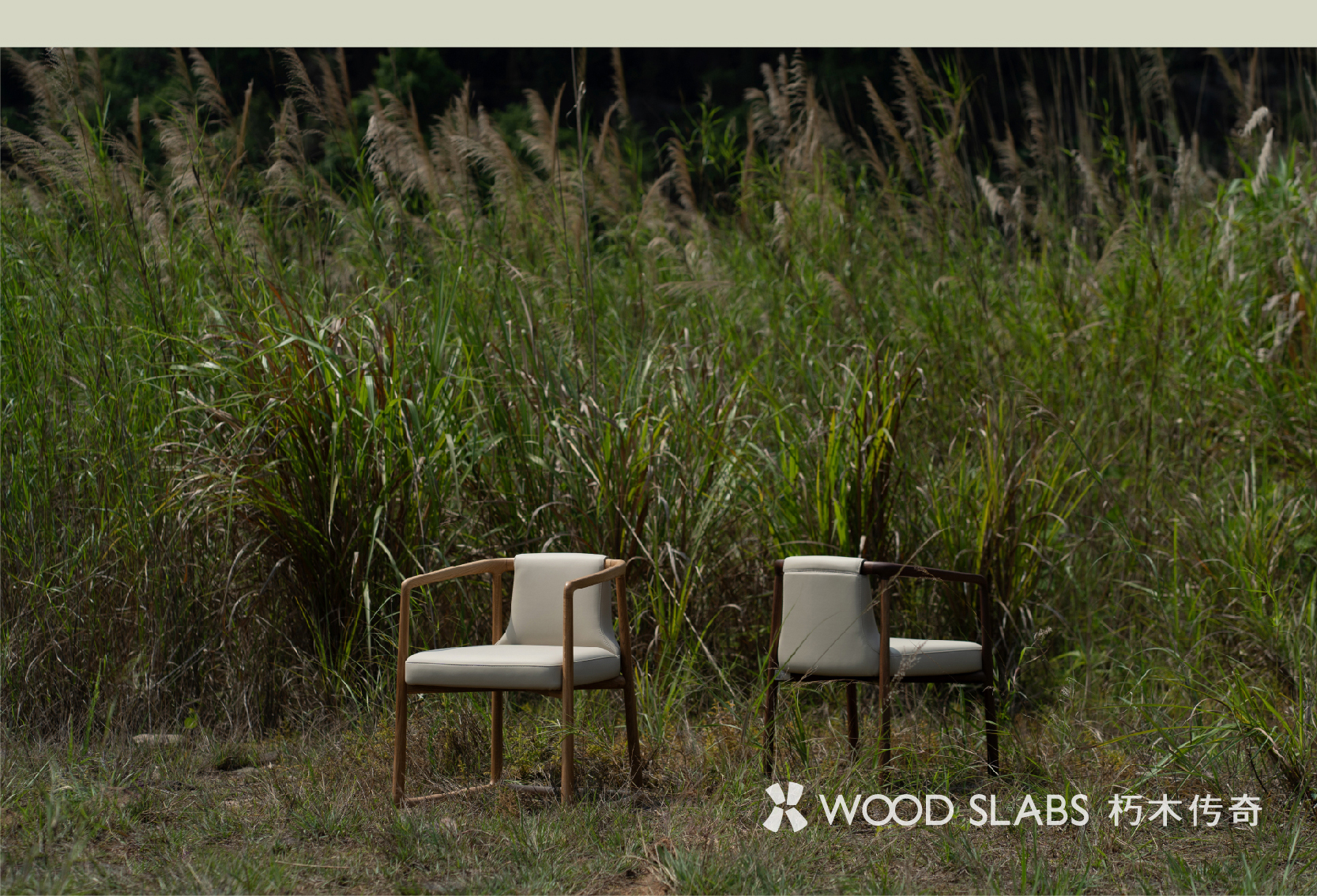
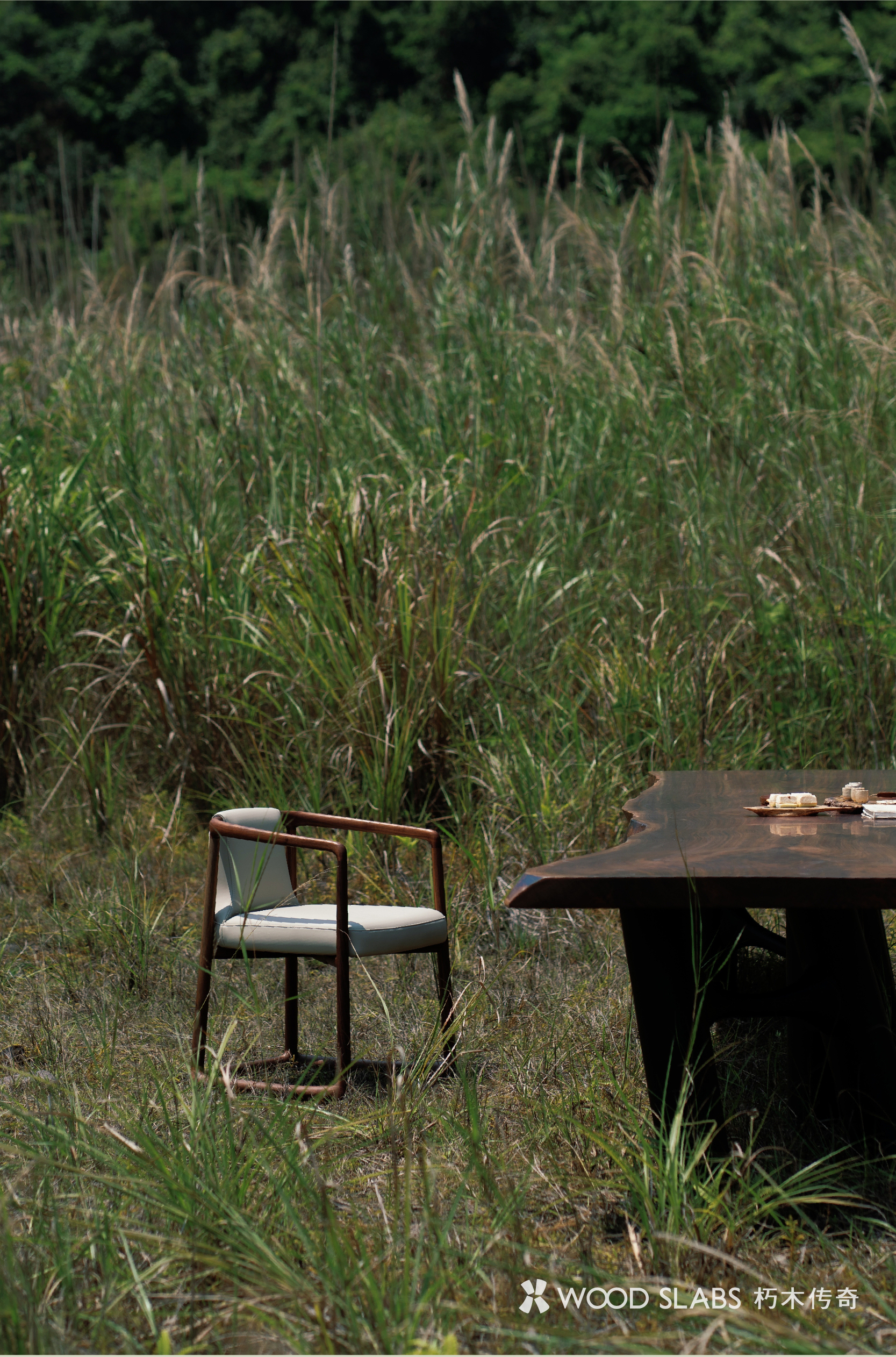
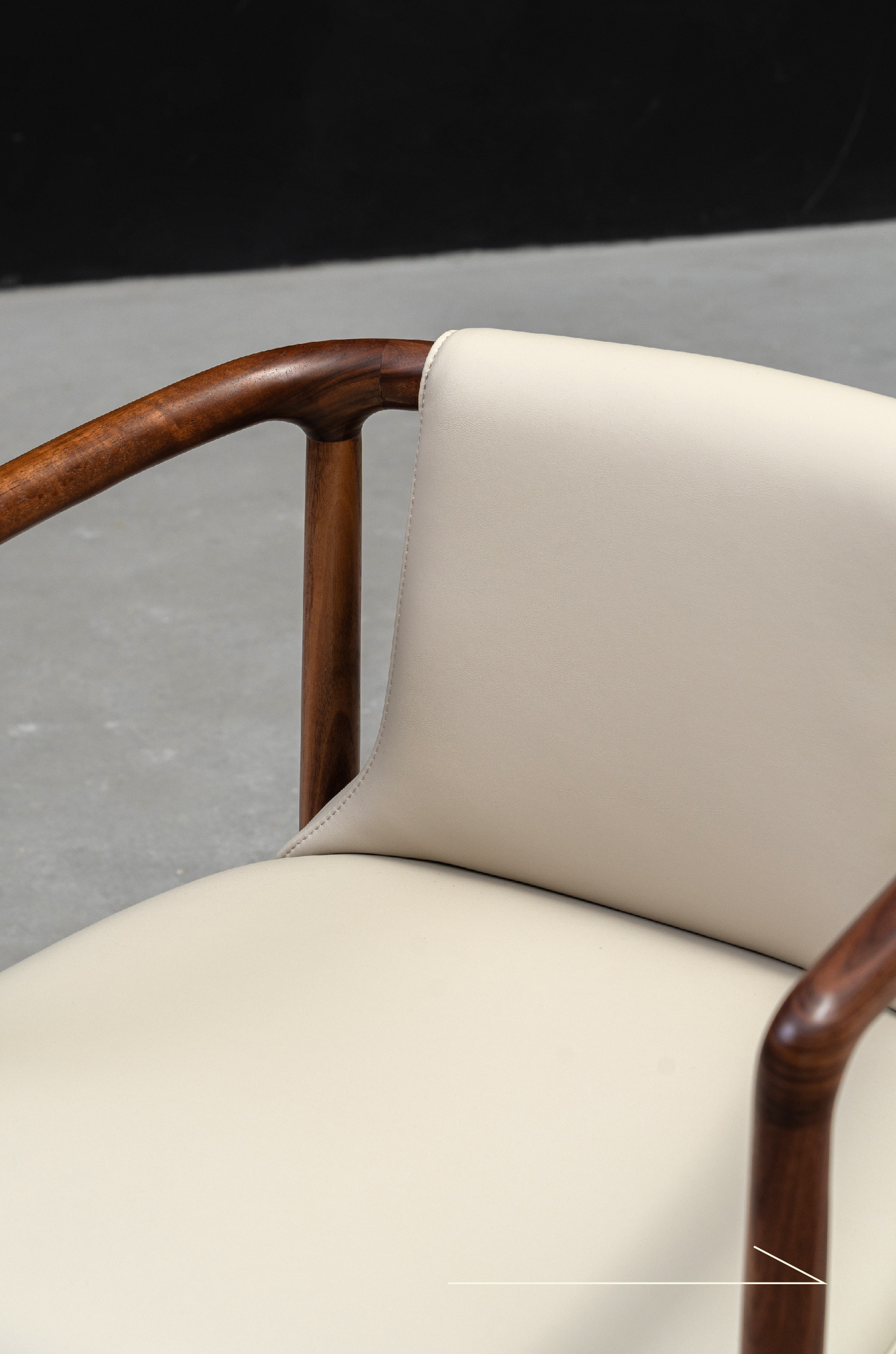
细节之处,扶手与靠背以直角台阶转折取代柔和曲线,带来更具建筑感的节点表达,既保留了法国白橡木的温润触感,又注入东方园林的框景意识。底撑落地形成梯形支撑,让纤细立框免于摇晃,获得稳定结构。
At the level of detail, the armrests and backrest replace softened curves with right-angled stepped transitions, introducing a more architectural articulation of joints. This preserves the warm tactile quality of French white oak while embedding an Eastern sense of framed perspective reminiscent of traditional gardens. The trapezoidal base support anchors the structure to the ground, allowing the slender vertical frame to remain stable and free from sway.
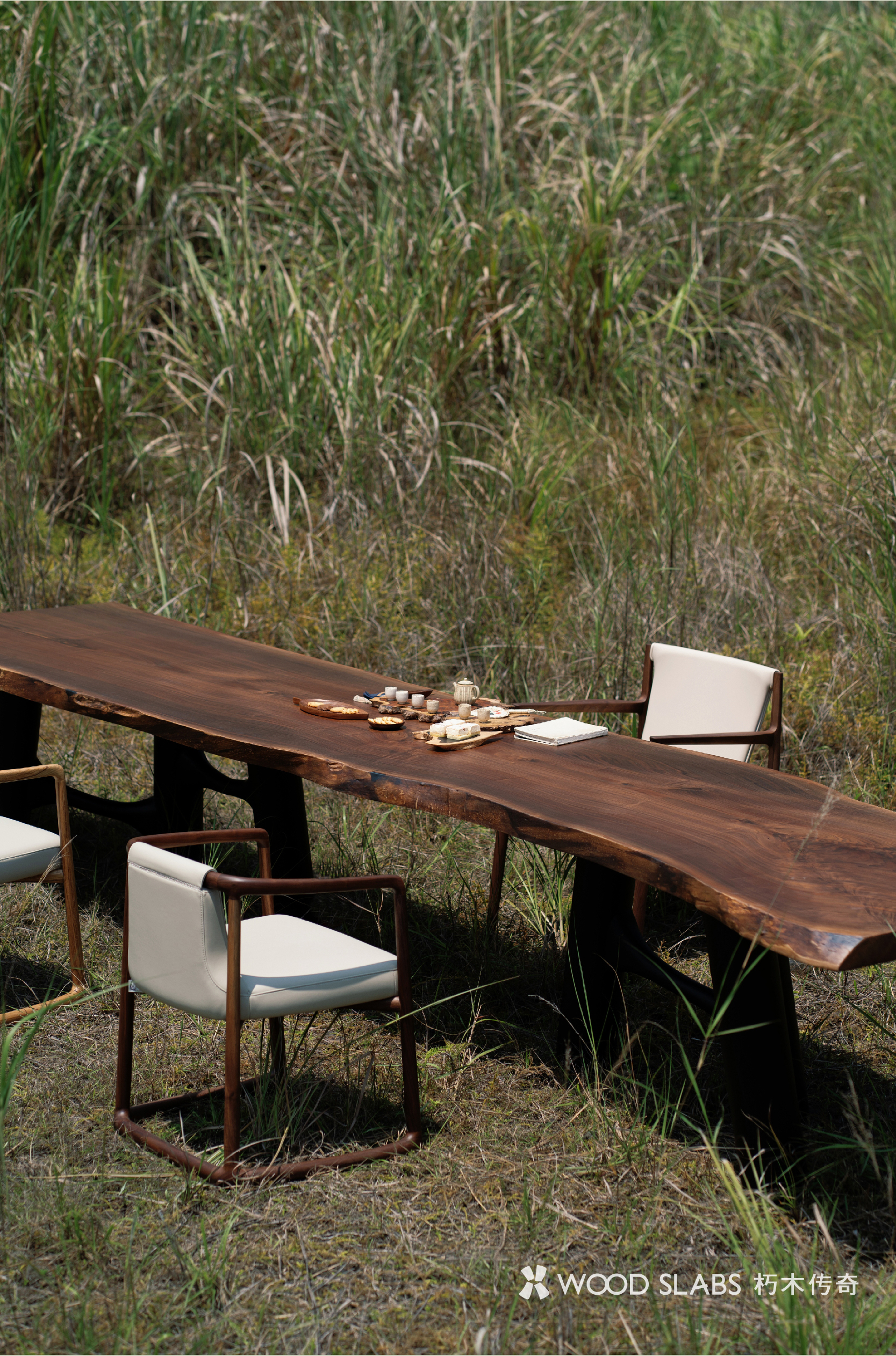
在使用中,软包坐垫与包覆靠背让木结构多了几分柔和,身体坐下去,会被自然接住,空间也随之慢下来。见松椅提供两种框架材质:黑胡桃木沉稳厚重,白橡木温润柔和,各自呈现不同的气质。它不张扬,却一直在场,安静而耐久。
In use, the upholstered seat and wrapped back soften the wooden structure, allowing the body to settle in with ease, while the space itself begins to slow. The Jiansong Chair is available in two frame options: black walnut, deep and grounded; and white oak, warm and gentle—each expressing a distinct character. It does not seek attention, yet remains quietly present, steady and enduring.
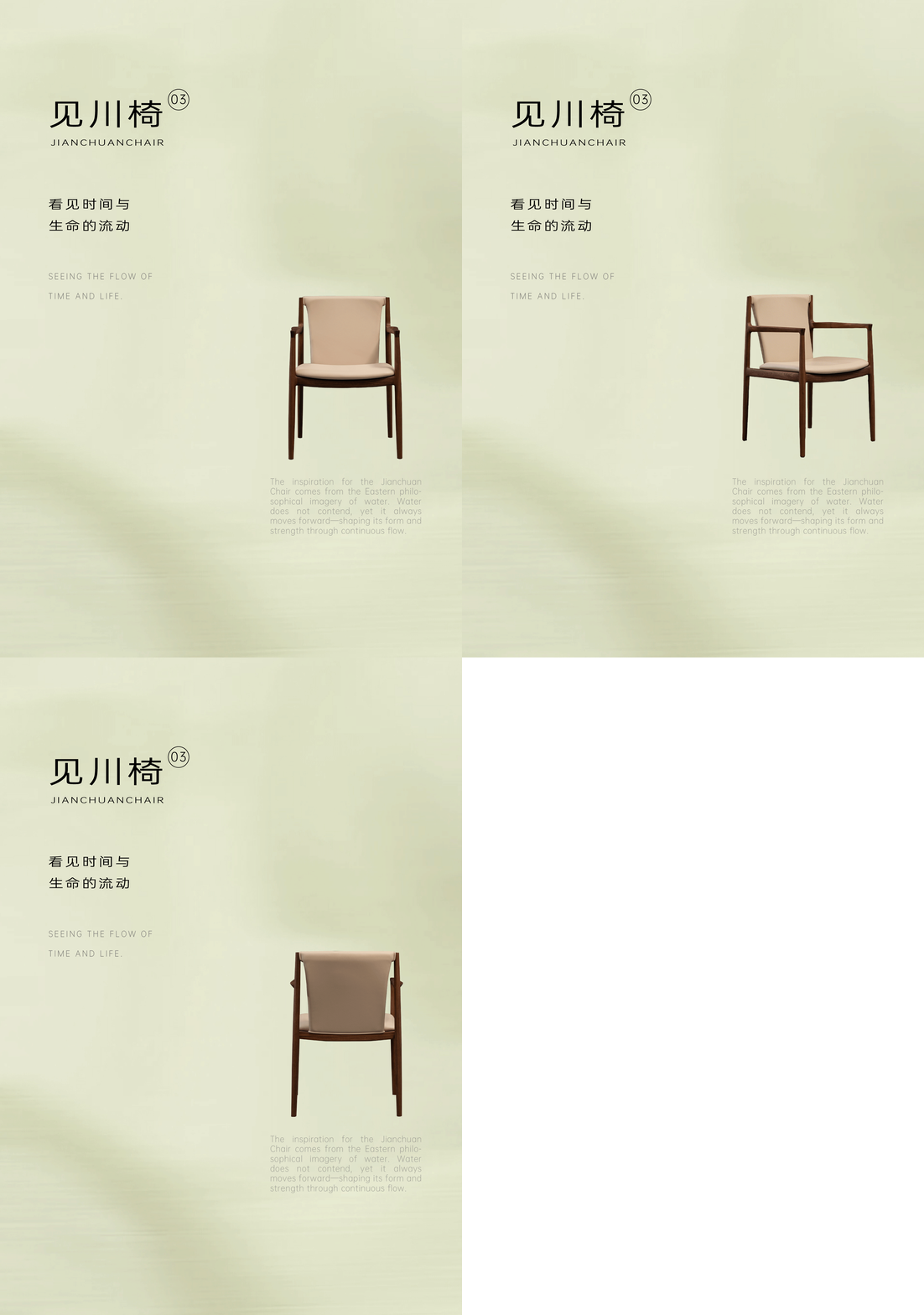
见川椅的灵感,源于东方哲思中「水」的意象。水不争,却始终向前,在流动中完成自身的形态与力量。这种柔韧而持续的生命状态,被转译为一种克制而流动的设计语言,使一把椅子不再只是静止的物件,而更像一种关于时间与感知的载体。
The inspiration for the Jianchuan Chair comes from the Eastern philosophical imagery of water. Water does not contend, yet it always moves forward—shaping its form and strength through continuous flow. This resilient and ever-moving state of life is translated into a restrained, fluid design language, allowing the chair to transcend the condition of a static object and become a vessel for time and perception.
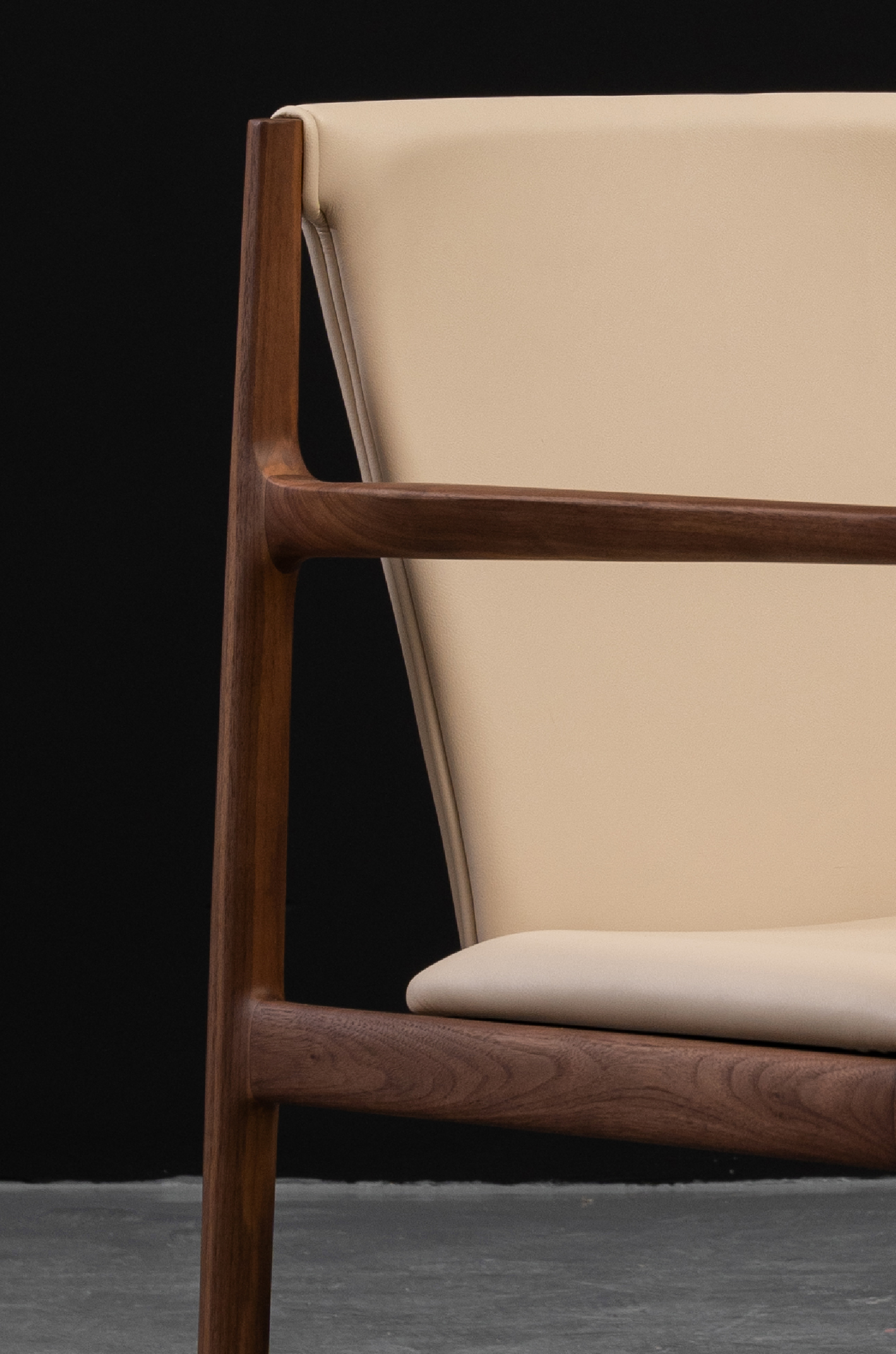
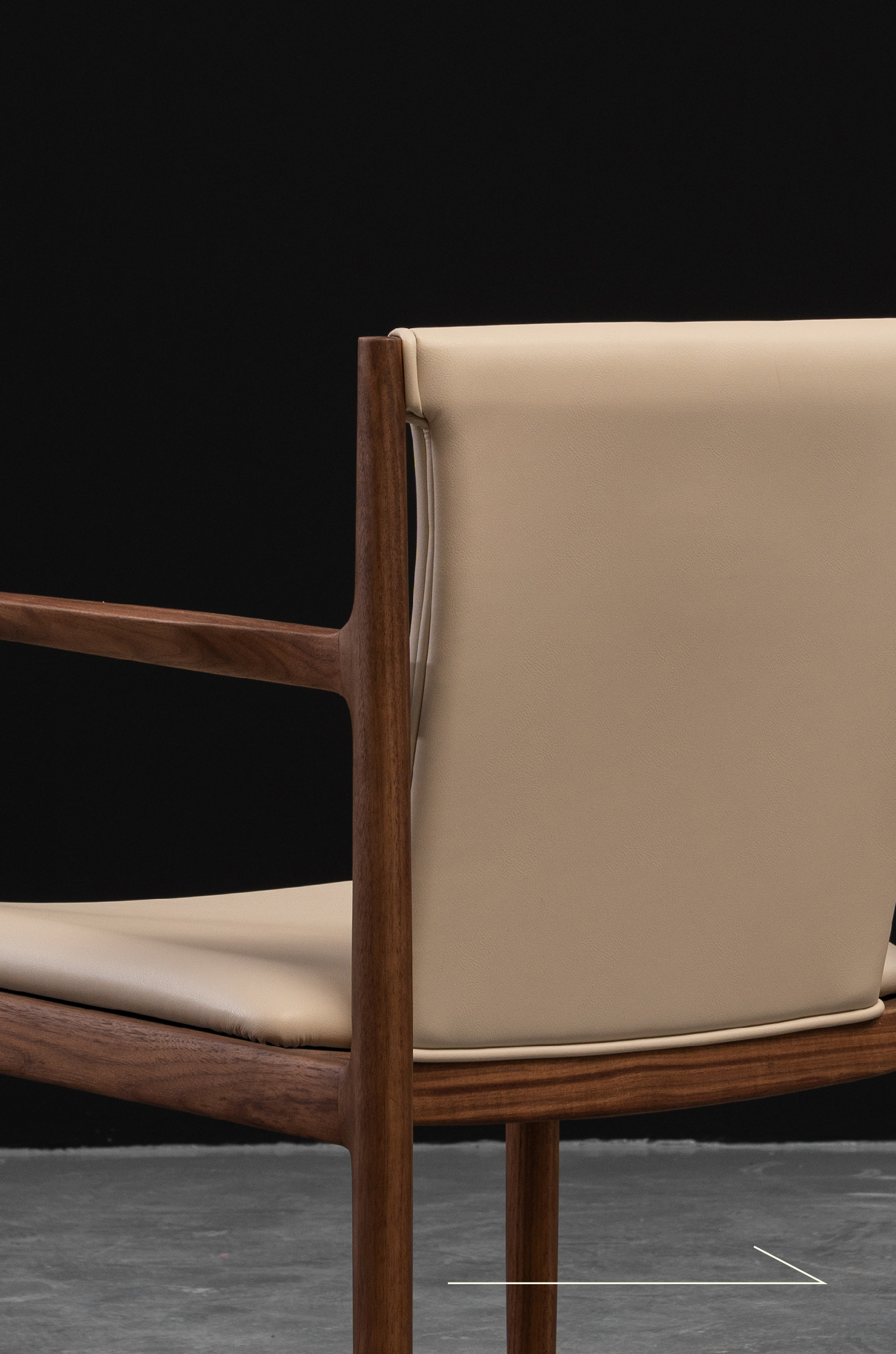
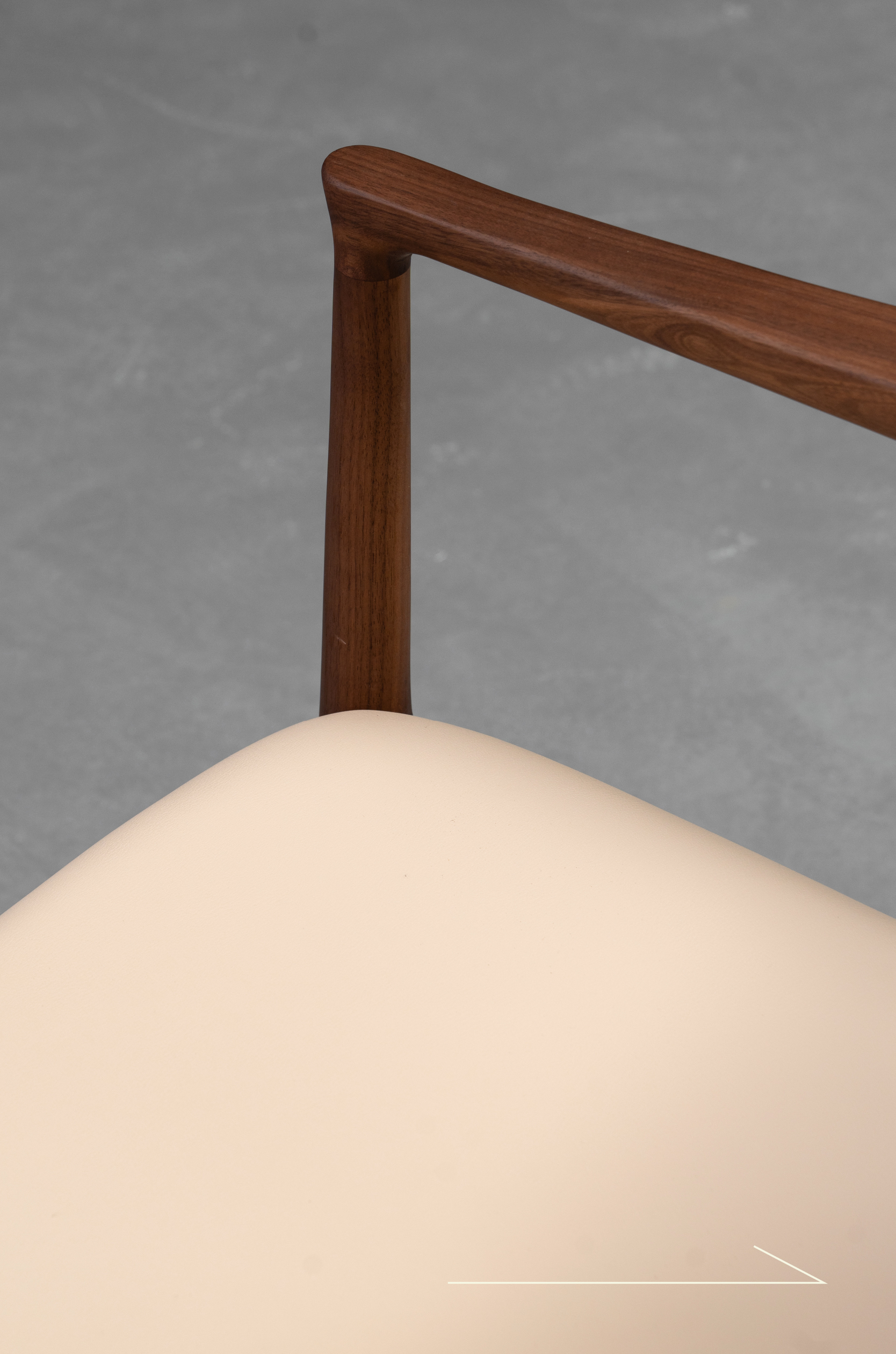
设计刻意摒弃繁复装饰,将表达收敛到一根线条的起承转合之中。顺着椅腿向上,结构在扶手处形成自然的平缓转折,整体轮廓连贯而流畅,如同水流在路径中的延展与回环。这种连续的骨架线条,在视觉上削弱了实木本身可能带来的厚重感,使空间多出一层呼吸感与轻盈感,也让「流动」成为可以被看见的状态。
The design deliberately avoids elaborate ornamentation, condensing expression into the rise and fall of a single continuous line. Flowing upward from the chair legs, the structure forms a natural, gentle transition at the armrests, creating a seamless and fluid silhouette—like water extending and looping along its path.This continuous structural line visually lightens the inherent heaviness of solid wood, introducing a sense of breathability and lightness to the space, while making “flow” a visible, perceptible condition.
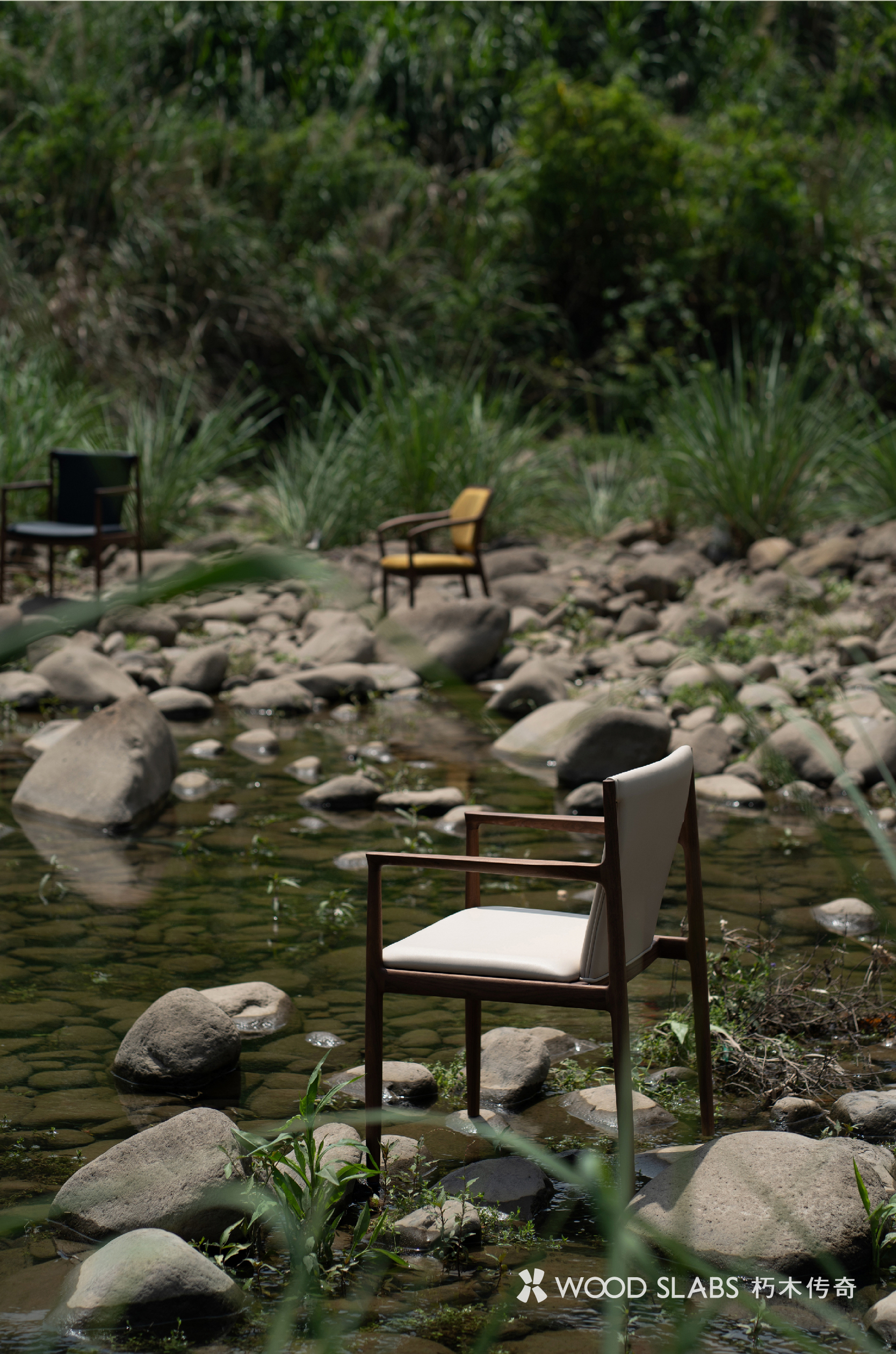

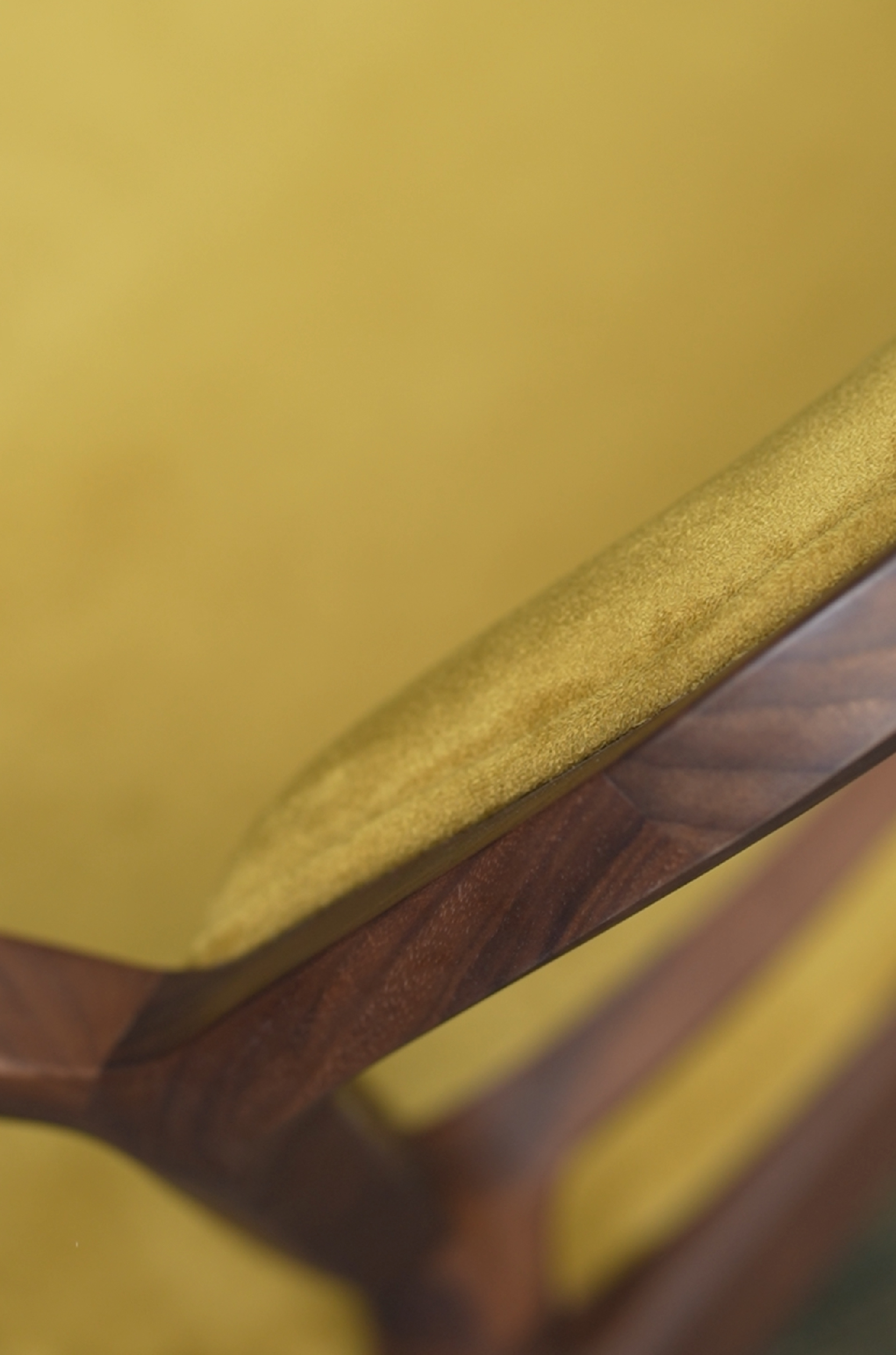
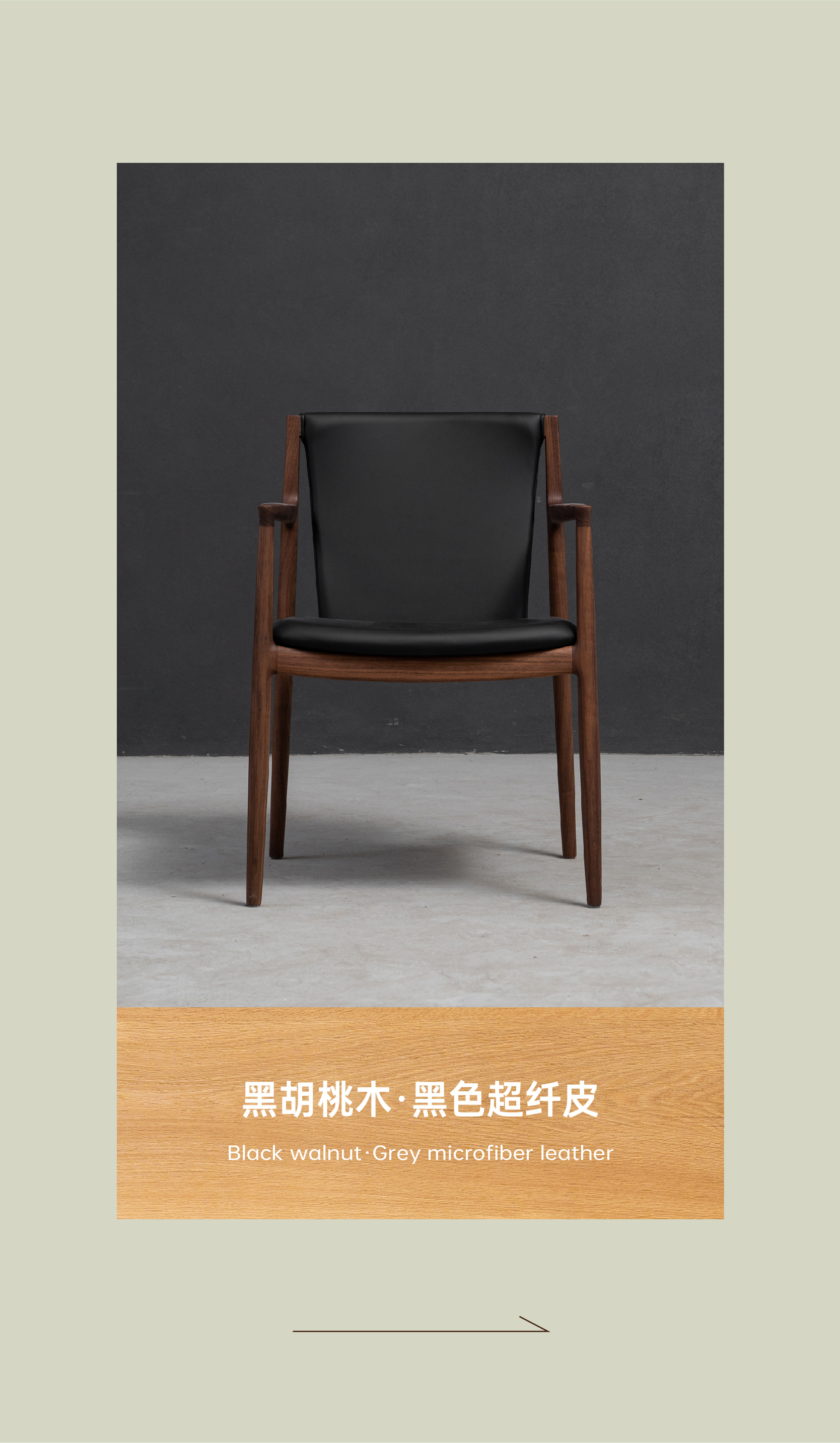
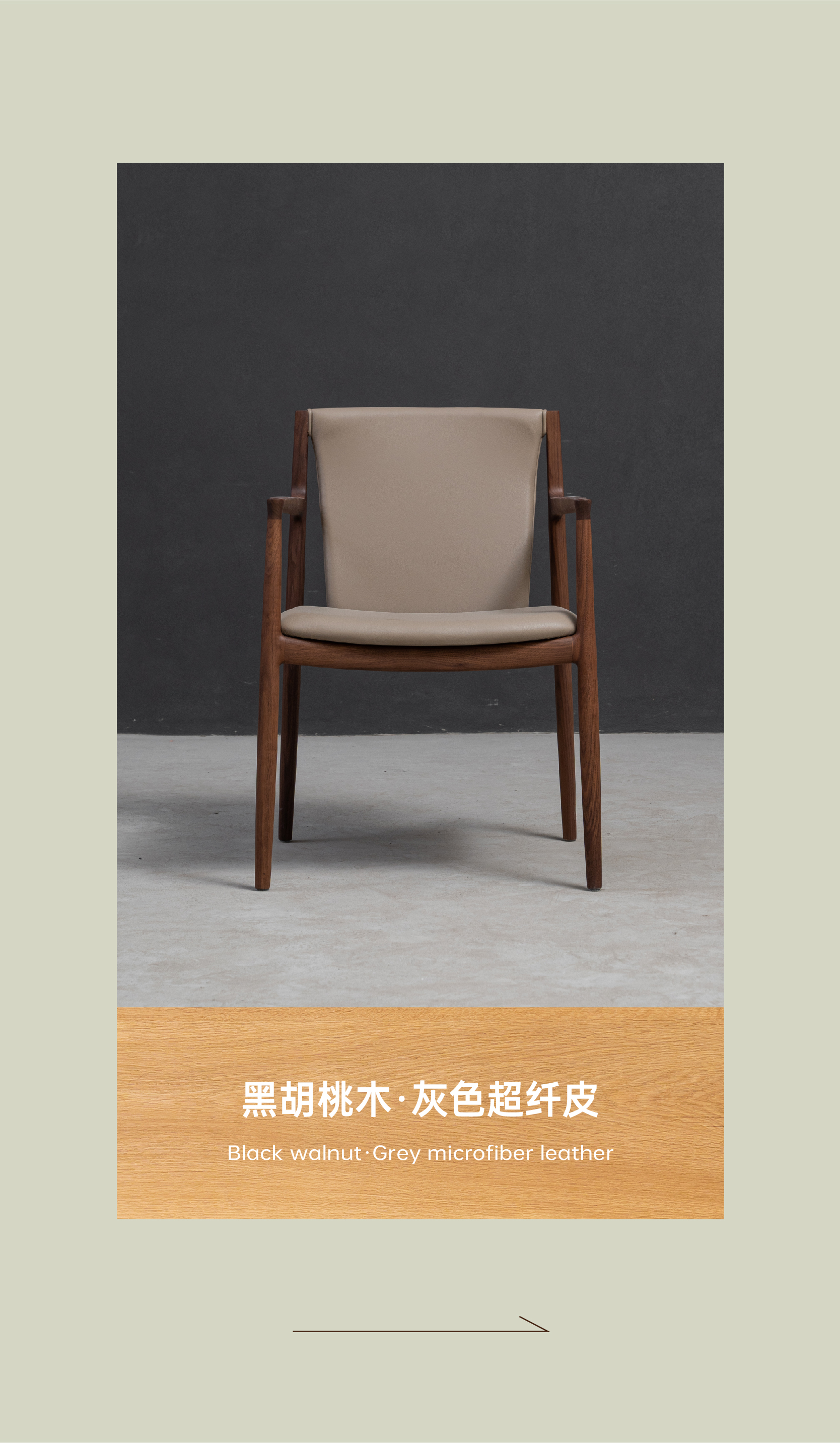
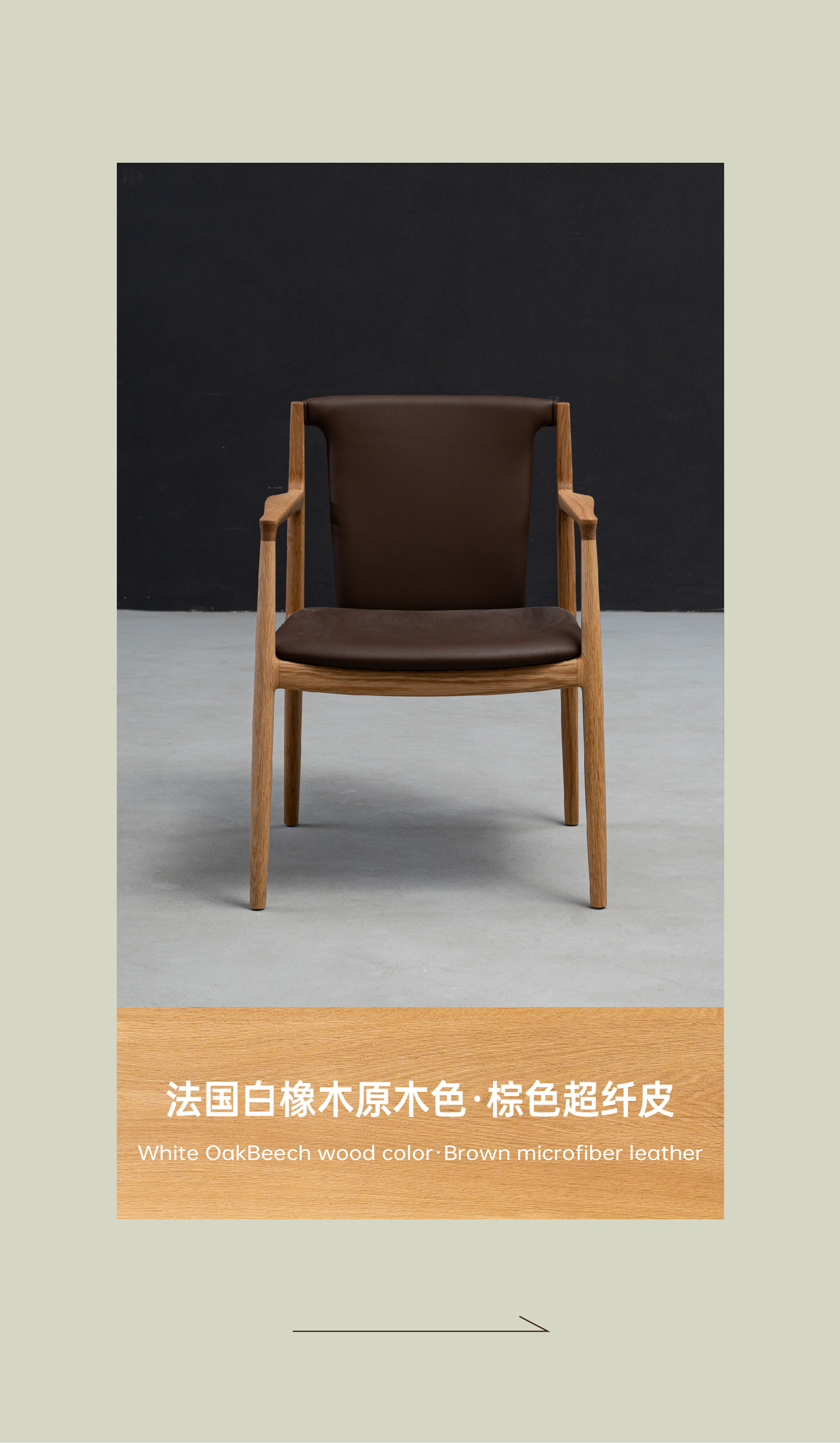
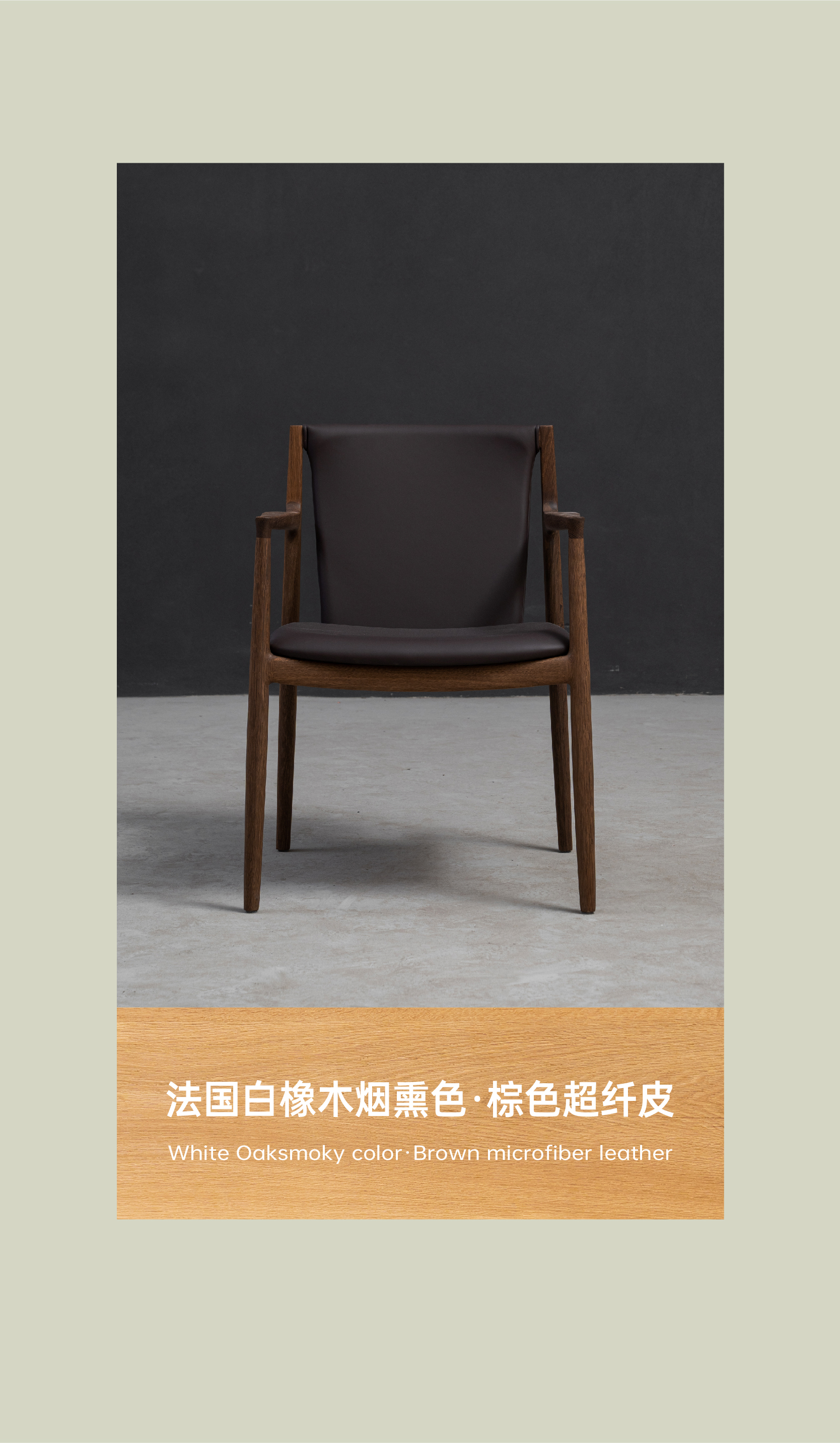
在结构与细节上,见川椅呈现出一种更为内敛的精确。皮革坐面与靠背并非简单叠加,而是嵌入木质框架形成的「槽」中,构成清晰的「承载与被承载」关系。视觉上,软包仿佛悬浮于框架之间,既轻盈,又稳定,使不同材质之间形成克制而明确的对话,也让整体更接近一种带有雕塑感的存在。
在此基础上,木质框架与皮革坐面也提供多种选择可能,使这一结构在不同空间语境中呈现出更丰富的适配可能。
In terms of structure and detail, the Jianchuan Chair expresses a more restrained precision. The leather seat and backrest are not simply layered onto the frame, but are embedded into grooves formed within the wooden structure, establishing a clear relationship of “supporting and being supported.”Visually, the upholstered elements appear to float within the frame—both light and stable—creating a restrained yet distinct dialogue between different materials, and allowing the whole piece to approach a more sculptural presence.
Building on this, the wooden frame and leather seat are available in multiple options, allowing the structure to adapt with greater nuance across different spatial contexts.
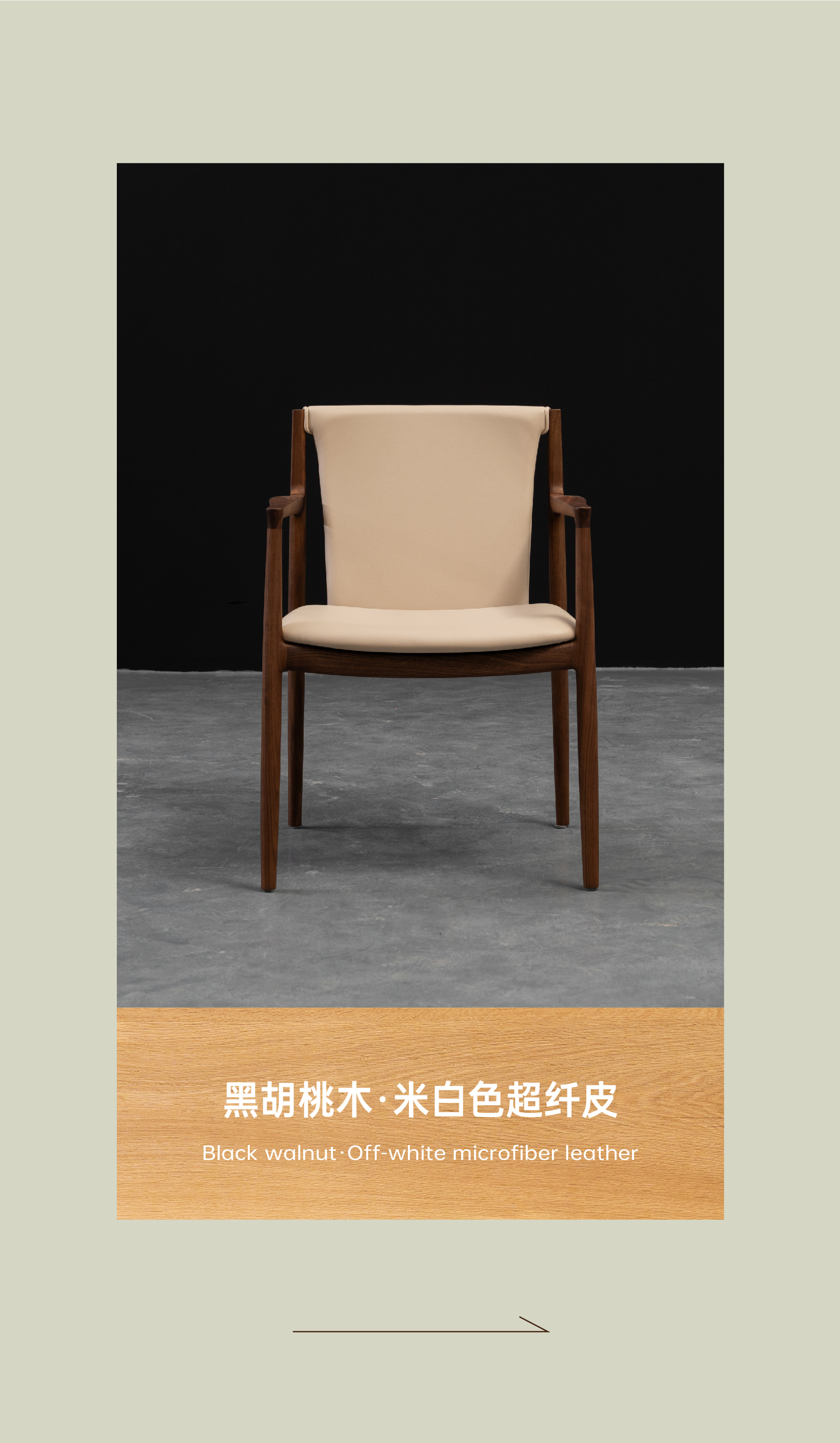
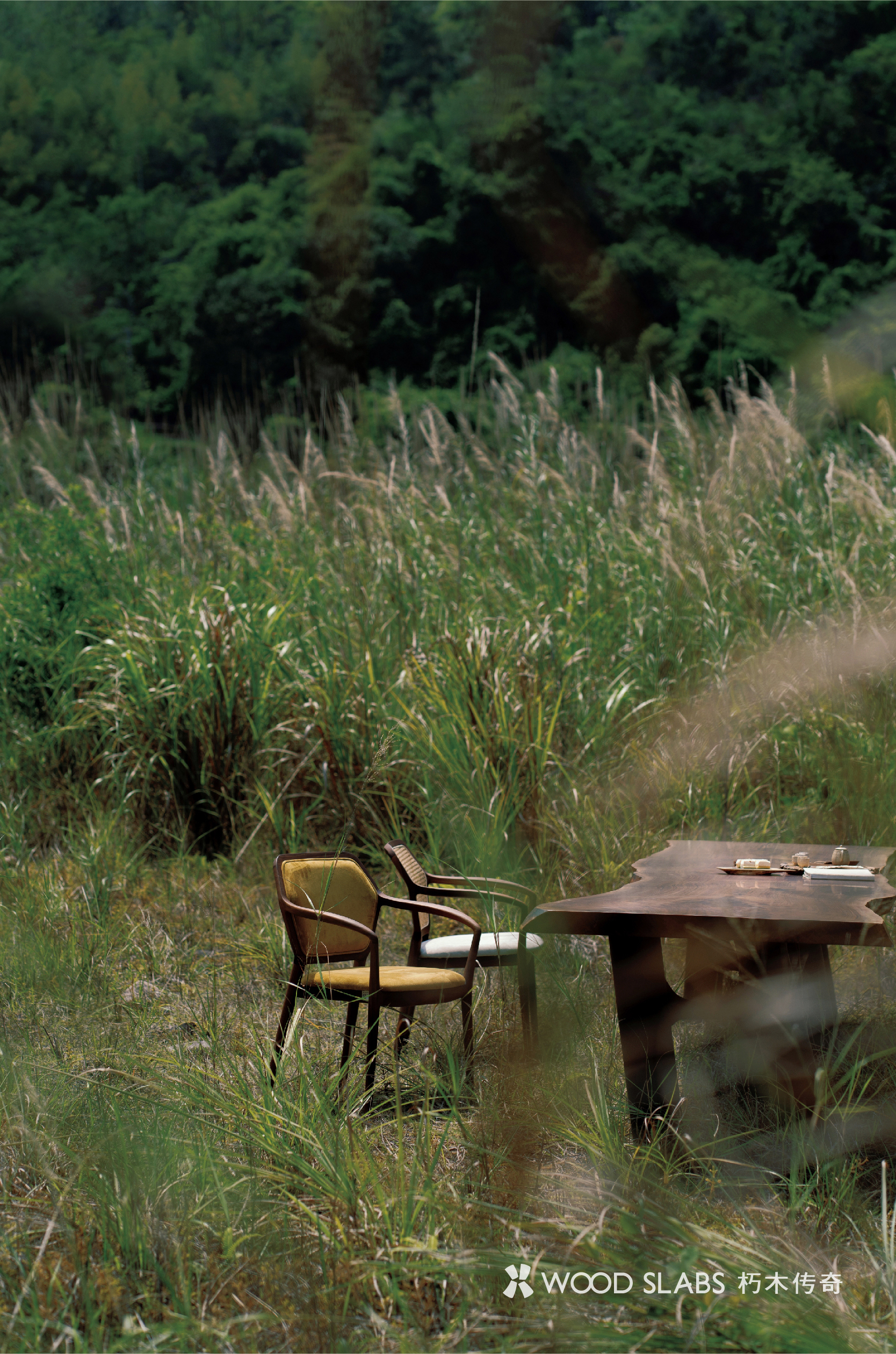
在空间关系中,见川椅以克制的方式参与环境,不抢占视觉中心,却始终维持清晰存在。无论与原木大板搭配,或置于日常起居之中,它都以一种流动而平衡的姿态融入其中。命名为「见川」,既是对其形态的回应,也是一种隐喻,在日常之中,看见时间缓慢流动,在使用之中,抵达内心的平静。
In spatial relationships, the Jianchuan Chair participates in its environment with restraint. It does not compete for visual dominance, yet it maintains a clear and continuous presence. Whether paired with a solid wood slab table or placed within everyday living spaces, it integrates itself through a fluid and balanced posture.Named “Jianchuan,” it is both a response to its form and a metaphor—within the everyday, one perceives the slow flow of time, and through use, arrives at a sense of inner stillness.